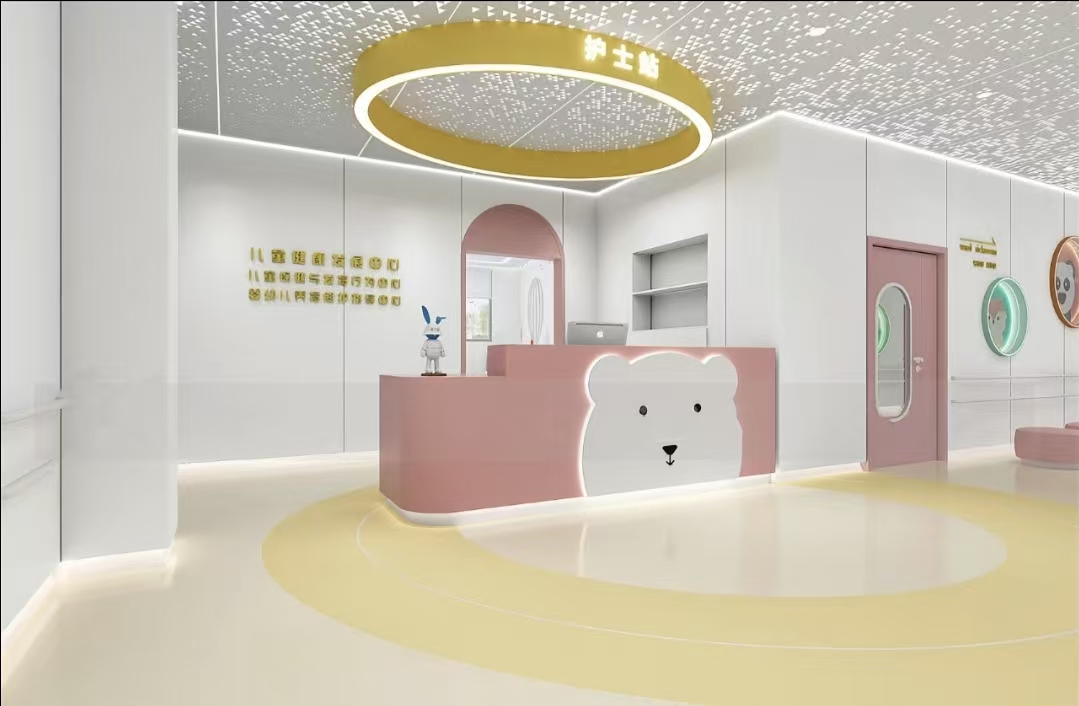
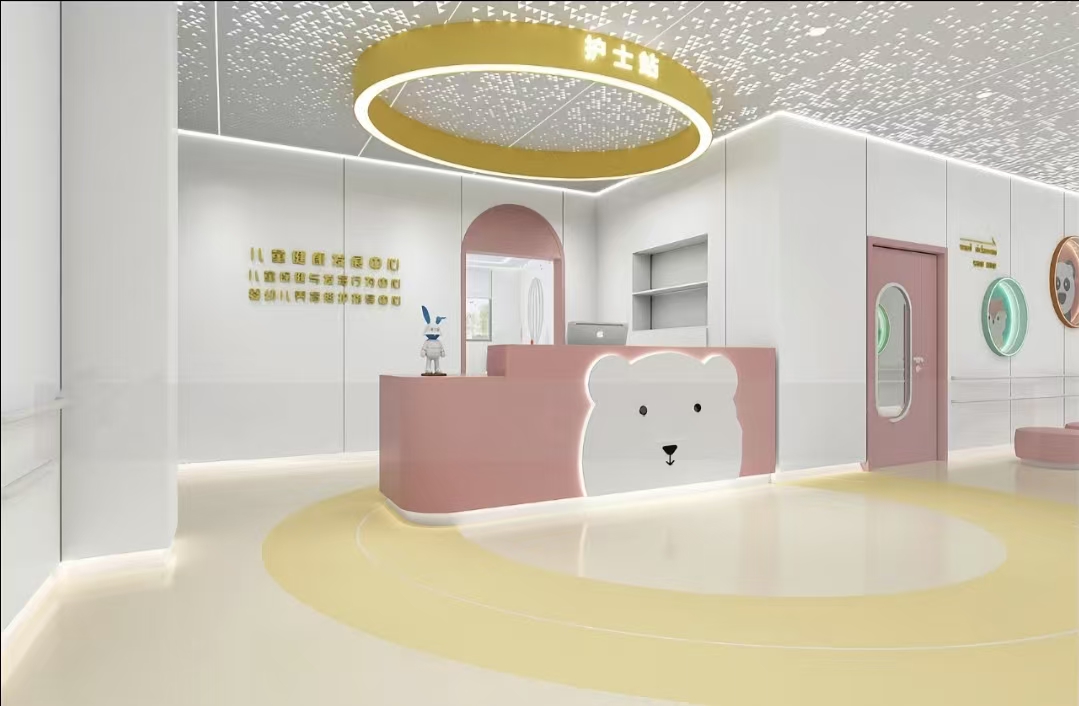
Say goodbye to cold, sterile white walls and embrace the warmth of a forest –a new generation of children’s hospital design: healing fear with data and childlike wonder
The design of the new generation of children’s hospitals deeply considers the unique psychological and physiological characteristics of children. Studies show that over 70% of children experience varying degrees of fear in hospital environments, with “white fear” and sharp edges being among the main contributing factors. Therefore, designers have generally abandoned the sterile, pale color schemes and instead adopted warm, soft color palettes. Psychological research indicates that colors such as light blue, light green, and beige can effectively lower heart rate and reduce anxiety by more than 25%. At the same time, all furniture and wall corners are rounded, which is not only aesthetically pleasing but also significantly reduces the risk of children accidentally bumping into and injuring themselves.
In the treatment area, the design is even more ingenious. Each room entrance features a different cartoon animal icon, such as “Elephant Examination Room” and “Dolphin Treatment Room.” This not only helps young children easily identify the rooms but also transforms finding the treatment room into a fun game, effectively reducing their resistance to treatment. Data shows that in clinics using these themed icons, children’s cooperation during treatment increased by an average of 40%.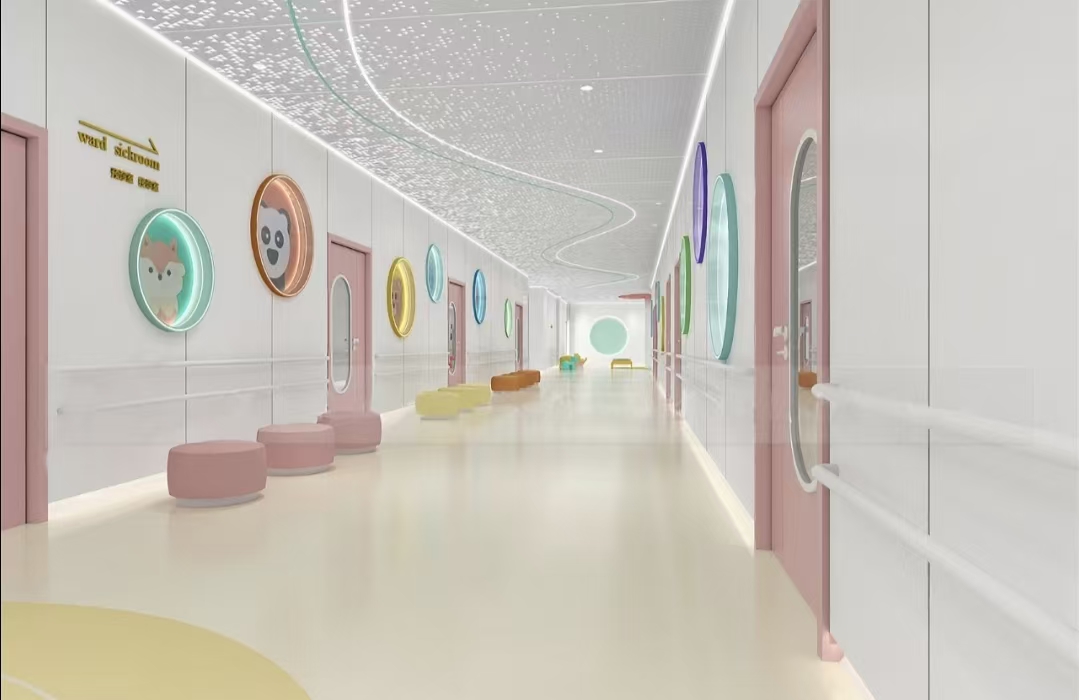
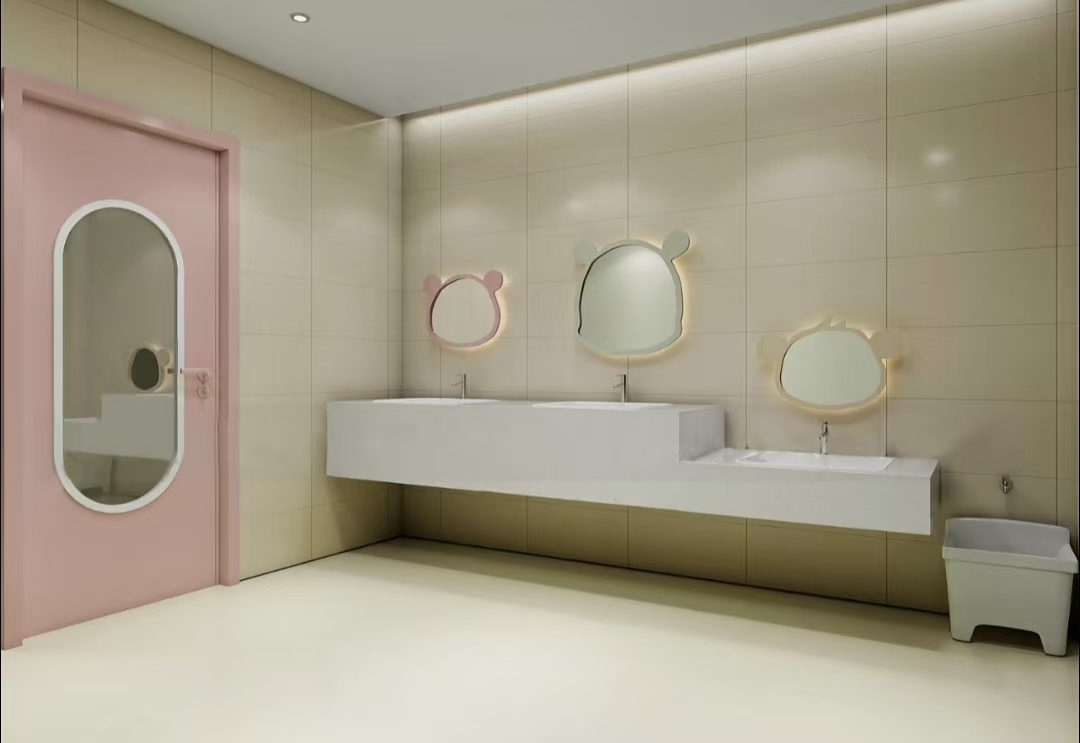
This care extends even to the smallest details. In the restrooms, child-friendly, low-height sinks and toilets are used throughout, decorated with bright colors and playful patterns to encourage children to use them independently, thus maintaining their dignity and autonomy. An in-house evaluation indicated that the specially designed children’s restrooms increased the cooperation rate in toilet training for young children by 35%.
“We recognize that the healthcare environment itself is a ‘silent therapist,’” said a senior architect involved in the design. “For pediatric patients, positive emotions and psychological states can directly or indirectly affect treatment outcomes and recovery speed. Our goal is to transform fear into curiosity and passive acceptance into active participation through design, making the hospital a positive and welcoming stop on their journey to health.”
发表回复