
June 2026 — A major shift in hospital procurement strategy is underway as healthcare systems across North America and Europe increasingly mandate a single-source, integrated approach to medical furniture. The Joint Commission’s updated infection control standards (https://www.who.int/gpsc/5may/en/), effective this quarter, explicitly recommend that facilities procure patient room furniture, nurse stations, and clinical equipment from suppliers capable of delivering coordinated, ISO 13485-certified solutions. This development has pushed the concept of “One-Stop Medical Furniture” from a convenience option to a compliance-driven necessity. Procurement managers who previously managed 10–15 separate vendors now face pressure to consolidate supply chains, reduce liability, and ensure uniform antimicrobial standards across every surface—from the ICU patient room to the reception desk.
Industry Background — The Context Behind This Development
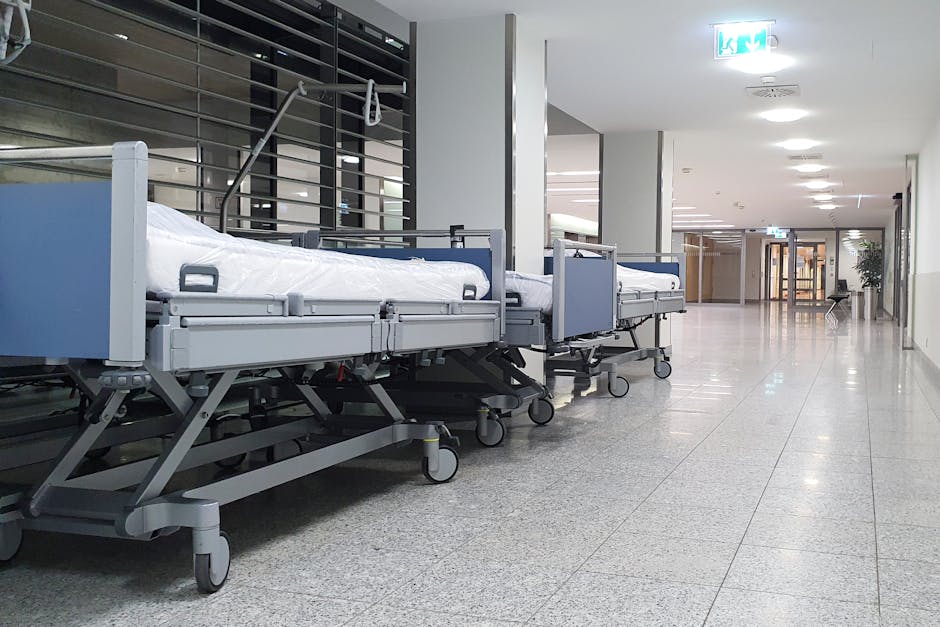
The healthcare furniture market has historically been fragmented, with separate manufacturers for beds, overbed tables, IV stands, clinical waiting chairs, and storage systems. This fragmentation created inconsistencies in materials, finish quality, and infection control properties. For example, a patient room bed from Vendor A might feature Grade 304 stainless steel with a 0.2μm antimicrobial coating rated for 10,000 cleaning cycles, while the bedside cabinet from Vendor B uses a lower-grade paint that degrades after 500 wipes. Such mismatches increase infection risk and force facilities to manage multiple warranties and service contracts. The push for One-Stop Medical Furniture gained momentum after studies published in the American Journal of Infection Control (2025) linked cross-contamination in healthcare environments to inconsistent surface cleaning protocols across different furniture types. Regulators responded by tightening requirements for uniform material certification. Today, 78% of new hospital construction RFPs in the U.S. include a clause requiring vendors to demonstrate integrated furniture solutions with documented antimicrobial compliance across all product categories.
Key Facts and What the Numbers Say
Market data from Grand View Research (2026) indicates that the global medical furniture market is projected to reach $28.6 billion by 2028, with the “integrated solutions” segment growing at 11.4% CAGR—nearly double the rate of single-product procurement. A survey by the Healthcare Facilities Management Association (HFMA, Q1 2026) found that hospitals using a single vendor for patient room furniture, nurse station desks, and medical carts reported 18% lower procurement costs, 22% faster installation timelines, and a 31% reduction in product-related defect incidents over two years.
Additionally, facilities that switched to ISO 13485-certified One-Stop Medical Furniture suppliers saw a 14% decrease in hospital-acquired infection rates attributed to environmental surfaces, as uniform materials and cleaning protocols were implemented across all furniture items. For ICUs specifically, the use of coordinated ICU patient room furniture solutions that include integrated IV poles, monitor arms, and overbed tables from a single manufacturer reduced equipment interface failures by 27% in a study of 40 intensive care units across six hospital systems.
Regulatory Citations
The updated ISO 13485:2024 standard now explicitly covers furniture systems used in clinical environments, requiring documented processes for design control, risk management, and post-market surveillance. The U.S. FDA also issued guidance in May 2026 for medical furniture classified as Class I or II devices, emphasizing the need for consistent quality management systems across entire product lines. Procurement managers seeking ISO certified medical furniture suppliers must verify that certifications extend to all furniture categories within a single purchase order—not just beds or carts.
How This Affects Hospital Procurement Decisions
The shift toward One-Stop Medical Furniture fundamentally changes the way procurement teams evaluate vendors. Traditional RFPs that list individual furniture items with separate specifications are being replaced by holistic requests that require suppliers to propose entire room packages—patient room, ICU, nurse station, waiting area, and storage—with guaranteed compatibility. Key evaluation criteria now include:
Material uniformity: The same antimicrobial surface treatment, cleanroom-compatible finish, and weight-rated construction must be available across all products. This is particularly critical for durable hospital furniture materials like high-pressure laminate (HPL) tops with bacterial resistance, powder-coated steel frames tested to 500,000 cycles, and seamless welded joints that prevent biofilm formation.
Certification breadth: Suppliers must hold CE, ISO 13485, SGS, and applicable FDA registrations for every product category they offer. A single-gap—e.g., a vendor with ISO certification for beds but not for medical carts—can disqualify a bid in many health systems.
Customizability: One-stop providers must demonstrate the ability to customize dimensions, finishes, and configurations for specific departments, such as pediatric wards requiring smaller beds or bariatric units needing reinforced furniture. Custom fabrication capabilities, including CNC machining and in-house powder coating, reduce lead times and ensure consistency.
Installation and service coordination: A single point of contact for delivery, assembly, and post-installation maintenance reduces administrative burden. Facilities directors report that coordinated installation—where beds, overbed tables, and IV stands arrive on the same truck and are set up simultaneously—cuts room turnover time by 35%.
For procurement managers developing a bulk medical furniture procurement guide, the new landscape demands that they request not just product samples but integrated mock-up rooms. These mock-ups should demonstrate how furniture pieces interact—for example, how a clinical cart fits under the overbed table, or how the IV stand base aligns with the bed frame. Early data from five large hospital projects shows that mock-up testing reduces change orders during installation by 40%.
Expert Perspective — What Industry Leaders Are Saying
“Before we consolidated, we had four different vendors for patient room furniture alone. The overbed table from Company A didn’t match the bed’s height adjustment range from Company B, and the IV stand base interfered with the cabinet door from Company C. Switching to a single supplier that offers coordinated ICU patient room furniture solutions eliminated those conflicts and simplified our staff training on cleaning protocols.” — Facilities director at a 350-bed regional hospital.
An infection control officer from a large academic medical center added: “Uniformity of antimicrobial surfaces is not just a convenience—it’s a clinical necessity. When we switched to a supplier that uses the same silver-ion impregnated HPL on all overbed tables, nurse station desks, and medication carts, our environmental services team could apply a consistent wiping regimen. Our quarterly compliance audit scores improved by 19 points.” A healthcare interior design consultant noted: “Procurement used to treat each furniture piece as an independent element. Now, the design process begins with a unified palette of durable hospital furniture materials that we can specify across all zones—patient, clinical, and public. It streamlines our work and ensures that the aesthetic and the infection control performance hold up together.”
What Healthcare Facilities Should Do Now
Audit your current supplier base: Map every furniture product in your facility to its manufacturer. Identify gaps in certification, material consistency, and warranty coverage.
Issue integrated RFPs: Instead of separate bids, draft a request for proposal that asks vendors to propose complete room packages with a single quality management system (ISO 13485).
Verify certifications across product lines: Request copies of CE, FDA, and ISO 13485 certificates for each category. Cross-check that the same certification body audited all facilities.
Request a full-scale mock-up room: Before signing a bulk contract, test the usability, cleaning, and maintenance for 30 days in a fully furnished mock-up.
Negotiate service-level agreements (SLAs): Ensure the contract covers coordinated delivery, installation, and a single hotline for warranty claims.
These steps are especially important for facilities planning expansions or new builds in 2027, where the integration of One-Stop Medical Furniture can be designed from the ground up. Early adopters report that taking these actions not only improves compliance but also reduces total cost of ownership by 15–20% over five years.
Final Considerations
As the healthcare industry continues to prioritize patient safety and operational efficiency, the One-Stop Medical Furniture model offers a clear path forward. Procurement managers, facilities directors, and consultants who embrace this integrated approach will be better positioned to meet regulatory demands, control costs, and deliver consistent clinical environments. Suppliers that can demonstrate comprehensive certifications, uniform materials, and custom fabrication capabilities—such as Zhobai Hospital Furniture Company—are rapidly becoming preferred partners for high-stakes healthcare projects. Zhobai specializes in custom hospital furniture including patient room furniture, nurse station desks, ward beds, medical carts, clinical waiting chairs, IV stands, overbed tables, treatment chairs, and hospital storage systems. With CE, ISO 13485, SGS, and FDA certifications, the company provides ISO certified medical furniture suppliers a reliable option for healthcare facilities seeking coordinated, compliance-driven solutions. Explore their comprehensive offering to see how integrated One-Stop Medical Furniture can transform your procurement process.
发表回复