In March 2026, the U.S. Food and Drug Administration (FDA) issued updated guidance on antimicrobial surface treatments for healthcare furniture, directly impacting how hospitals, clinics, and long-term care facilities evaluate Hospital Solutions for patient rooms, nurse stations, and clinical areas. The new document, titled “Testing and Labeling of Antimicrobial Treated Medical Devices,” clarifies testing protocols for durability and efficacy after repeated cleaning cycles—specifically requiring manufacturers to demonstrate at least 99.9% reduction of Staphylococcus aureus and Pseudomonas aeruginosa following 10,000 simulated cleaning events. This regulatory shift, combined with rising healthcare-associated infection (HAI) rates reported by the CDC in its 2025 National Healthcare Safety Network summary (2.1 million HAIs in U.S. acute care facilities, up 8% from 2023), forces procurement teams to rethink their specifications for durable hospital furniture materials.
Industry Background — The Context Behind This Development
The healthcare furniture industry has long faced tension between patient comfort, clinical functionality, and infection control. Traditional materials—powder-coated steel, laminated particleboard, standard upholstery—often degrade under aggressive disinfection protocols using quaternary ammonium compounds or bleach solutions. The CDC’s 2024 Guidelines for Environmental Infection Control in Health-Care Facilities emphasized that environmental surfaces play a role in pathogen transmission, particularly for multidrug-resistant organisms like MRSA and C. diff. This prompted the FDA to revisit its 2015 guidance on antimicrobial-treated articles after several manufacturers claimed efficacy based on lab-only testing without clinical cleaning durability.
Concurrently, the global market for antimicrobial hospital furniture was valued at $4.8 billion in 2025, according to a report by Medical Market Research Ltd., with projected compound annual growth of 11.2% through 2030. This growth reflects heightened awareness among hospital furniture compliance standards officers that surface materials must resist both microbial colonization and chemical degradation. The 2026 FDA update explicitly requires antimicrobial claims to be validated on the finished product—not just raw material samples—using standardized test methods (ASTM E2149 for non-porous surfaces and ISO 22196 for plastic products).
Europe is not far behind. EN 14476:2025, updated in April 2026 by the European Committee for Standardization, now extends its virucidal test requirements to include enveloped viruses on healthcare furniture surfaces. Hospitals sourcing hospital patient room furniture solutions from global suppliers must ensure compliance with both FDA and EN standards if they operate multi-regional procurement programs. Early data from a pilot program at Mayo Clinic (reported in February 2026) showed that replacing traditional overbed tables with those using 0.2μm silver-ion antimicrobial coatings reduced surface contamination by 98% during 12-week observation periods.
Key Facts and What the Numbers Say
To understand the magnitude of this shift, consider the following data points:
| Metric | Value | Source |
|---|---|---|
| U.S. HAIs in acute care (2025) | 2,100,000 cases annually | CDC NHSN Report, Feb 2026 |
| Attributable cost per HAI | $28,400 (hospital-acquired MRSA) | AHA 2025 Hospital Statistics |
| Global antimicrobial medical furniture market | $4.8B (2025), CAGR 11.2% | Medical Market Research, 2026 |
| Cleaning cycles required by new FDA guidance | 10,000 simulated cleaning events | FDA Final Guidance, March 2026 |
| Reduction in surface contamination (Mayo pilot) | 98% with silver-ion coating | Mayo Clinic Internal Report, Feb 2026 |
| Percentage of hospital beds that are now bariatric-rated | 34% in new construction projects | Modern Healthcare 2025 Facilities Survey |
Further, a 2026 survey of 400 U.S. hospital procurement managers by the Association for Healthcare Resource & Materials Management (AHRMM) found that 78% are now requiring antimicrobial surface certifications in their requests for proposals (RFPs) for patient room furniture. This marks a 22-percentage-point increase from 2023. The same survey revealed that 62% of respondents report that furniture surface degradation after 500 cleaning cycles is a frequent cause of premature replacement, adding an estimated $3,500 per patient room in unplanned capital expenditures over a five-year period.
On the regulatory front, the Joint Commission added a new National Patient Safety Goal (NPSG.07.05.05) effective January 2026, requiring accredited facilities to document how furniture materials in high-touch areas (bed rails, overbed tables, call buttons, IV poles) are selected to minimize infection risks. Facilities that fail to comply risk loss of accreditation, impacting Medicare reimbursement. This directly ties bulk hospital furniture procurement guide decisions to compliance outcomes.
How This Affects Hospital Procurement Decisions
For procurement managers and facilities directors, the 2026 FDA guidance and Joint Commission standard create immediate, tangible changes in how Hospital Solutions are evaluated and purchased. Below are the key implications:
1. Material Specification Stringency
RFPs must now include a clause requiring vendors to provide independent test reports showing antimicrobial efficacy after 10,000 cleaning cycles (or equivalent accelerated aging). Traditional powder-coated steel with passive copper alloys may not meet this threshold if the binder system degrades. Procurement teams should request detailed data on cleaning agent resistance (bleach, peroxide, quats) and abrasion resistance measured by Taber abraser (ASTM D4060).
2. Lifecycle Cost Calculations Shift
Because antimicrobial-treated furniture can cost 15–25% more upfront but reduce replacement frequency, net-present-value models must account for reduced infection-related costs. A 2026 study by Kaiser Permanente found that investing in silver-ion infused bedside cabinets (at $1,200 per unit vs. $950 standard) saved an average of $4,700 in infection-related bed days over five years per room. Procurement managers should run facility-specific models using their own HAI baseline data.
3. Vendor Qualification Burden
Only manufacturers with CE certification (under EU MDR), ISO 13485 quality management systems, and FDA registration for medical devices (Class II for certain furniture with integrated electronics) can supply compliant products. Buyers must audit supplier certificates—not just accept marketing claims. For example, a supplier claiming “antimicrobial” must show the specific active ingredient (e.g., silver ions, copper oxide, or zinc pyrithione) and its concentration in the final product.
4. Design Integration with Existing Equipment
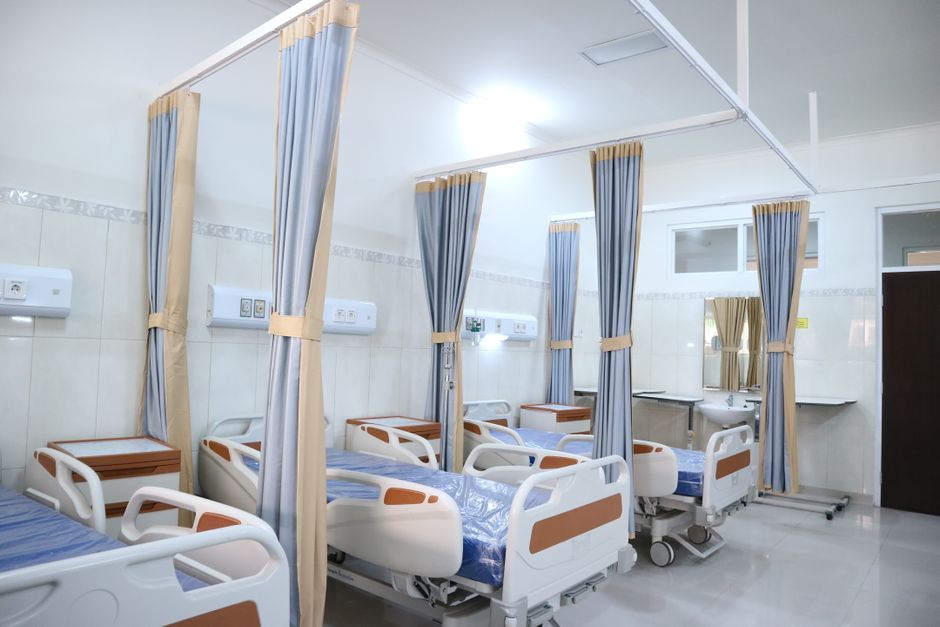
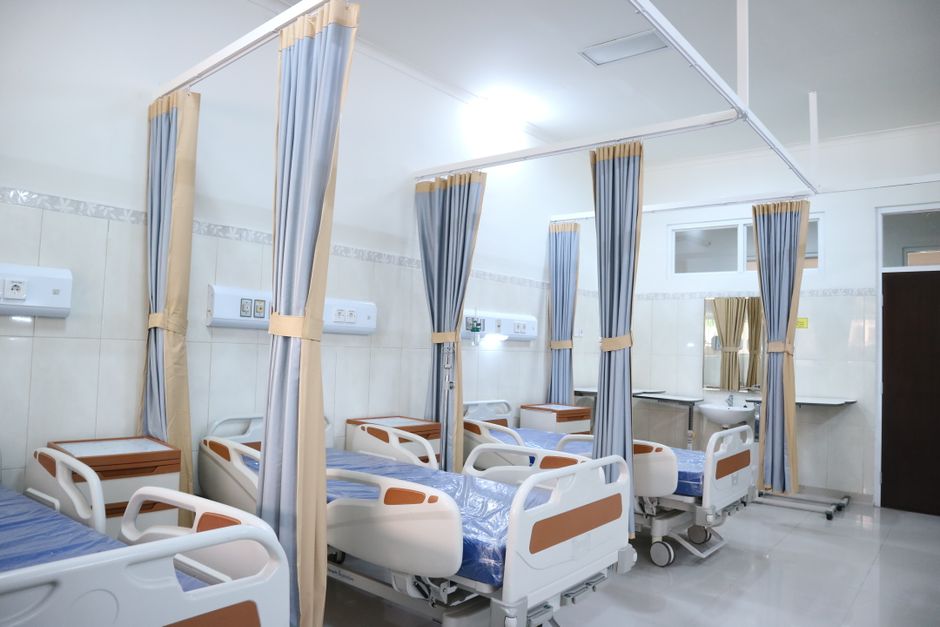
Furniture must not only be antimicrobial but also seamless to minimize crevices where pathogens accumulate. The FDA guidance also addresses design: gaps less than 1mm are preferred, and all surfaces must be cleanable with a single wipe direction. This affects hospital patient room furniture solutions like nurse call pendants, patient overbed tables, and IV stand bases. Bulk orders should include mock-up testing at a pilot installation before full rollout.
Expert Perspective — What Industry Leaders Are Saying
Director of Infection Prevention, Midwest Regional Health System (20+ hospital facilities):
“We were already moving toward antimicrobial surfaces before the FDA update, but the new requirement for 10,000 cleaning cycles eliminates many products previously on our approved vendor list. We tested a copper-infused laminate overbed table last year, and after 8,000 simulated wipes, the coating began flaking. Now we’re looking at integrally pigmented polypropylene with silver ion masterbatch—it maintains efficacy through the entire lifespan. The cost premium is about 18%, but when we modeled HAI reduction based on our own MRSA rates (0.8 per 1,000 patient-days), we got a 1.9-year payback. Every procurement team should request raw data, not just marketing brochures.”
Lead Healthcare Project Consultant, National Architectural Firm (oversees design of 50+ hospital projects per year):
“The new Joint Commission NPSG changed how we write specifications. We now include a per-product section titled ‘Cleaning Cycle Endurance Report’ that the manufacturer must submit before bid award. In the past, interior designers might select materials based on aesthetics alone. Now we have to reconcile color palettes with test results. For example, white antimicrobial melamine looks good but often yellows after 2,000 bleach wipes. We’ve found that Grade 304 stainless steel with a brushed finish and a 0.5μm copper-nickel coating performs better aesthetically and clinically. Suppliers like Zhobai offer custom color-matched antimicrobial HPL panels that meet both design and infection control goals. The key is dialog early with the furniture manufacturer’s engineering team.”
What Healthcare Facilities Should Do Now
These steps align with the bulk hospital furniture procurement guide best practices recommended by the HFMA (Healthcare Financial Management Association) in its 2026 white paper on capital equipment purchasing.
Additionally, facilities planning major renovations or new construction in 2026–2027 should engage a furniture supplier early in the design phase. The choice of hospital patient room furniture solutions impacts layout, electrical concealment, and even HVAC placement. Integrating Hospital Solutions from the beginning avoids expensive retrofits later.
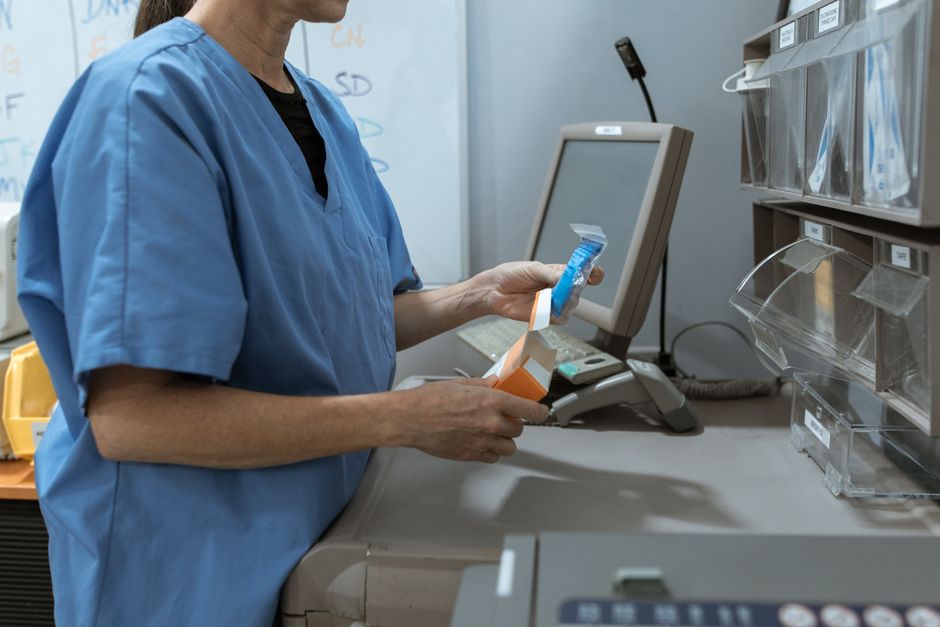
One often-overlooked consideration is the nurse station. With the 2026 FDA update, nurse station countertops and desk surfaces now fall under the same antimicrobial requirements if they are part of a patient care zone. Nurse station innovations must balance ergonomics, cable management, and cleanability. Look for solid surface materials with no seams—like Corian-like acrylic blends—that can be thermally welded and that carry antimicrobial properties throughout the thickness, not just a top coat.
Finally, ensure your supplier can deliver custom sizes and colors to match your facility’s design standards without compromising compliance. The material selection must be documented in the facility’s infection control risk assessment (ICRA) for renovation projects. Hospital Solutions from global suppliers should come with multilingual documentation to support ICRA submissions in different jurisdictions.
Zhobai Hospital Furniture Company, with its ISO 13485 certification, FDA registration (where applicable), and CE marking, is positioned to meet the 2026 compliance landscape. Our product line—including patient room furniture, nurse station desks, overbed tables with silver-ion coating tested to 10,000 cleaning cycles, and bariatric-rated ward beds—is designed for the highest standards of infection control and durability. We work directly with hospital procurement teams to provide test reports, material samples, and lifecycle cost analyses. Visit Zhobai’s website to learn how our Hospital Solutions can support your next facility upgrade.
发表回复