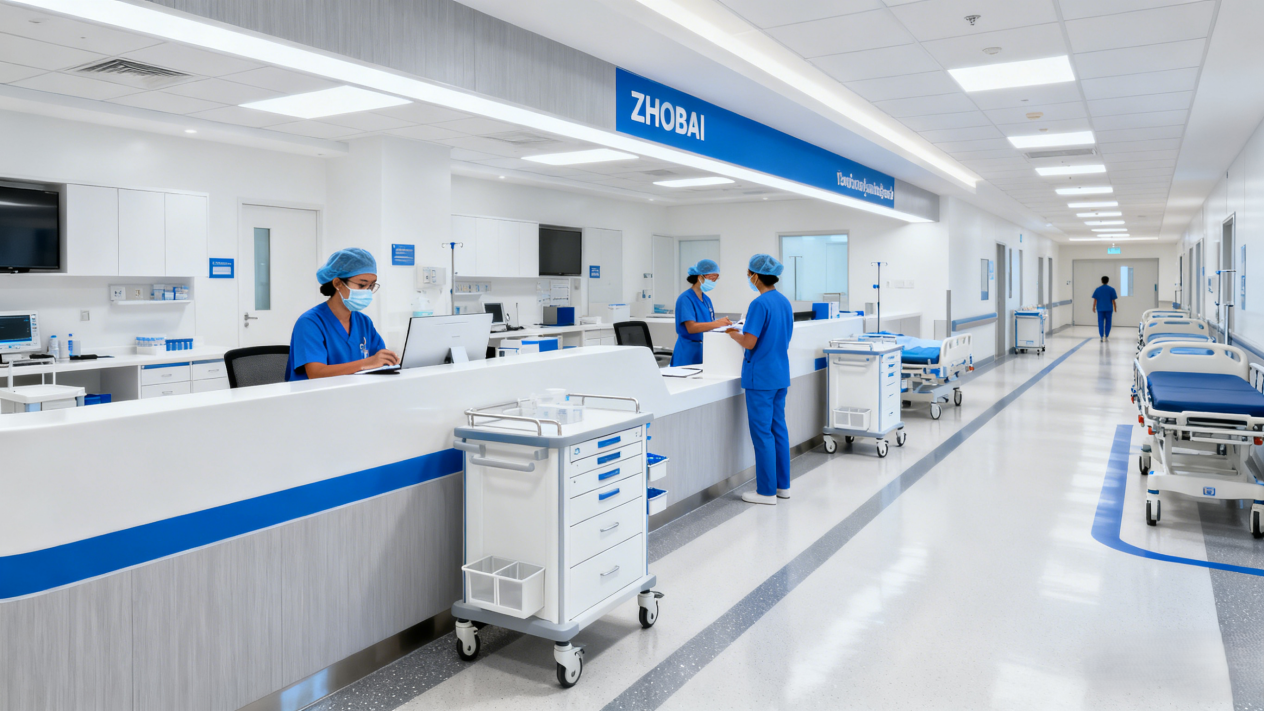
ZHOBAI Technology Insight: How Material Evolution and Process Advancement Boost Hospital Space Performance
When building a hospital, the choice of materials and craftsmanship for medical furniture isn’t just a technical detail—it directly impacts how smoothly medical services run, how comfortable patients feel, and how well the facility can prevent infections. What’s more, smart design and planning hold the key to making medical furniture fit perfectly into the space, maximize area usage, and keep daily operations efficient.
At ZHOBAI, we’ve built our one-stop medical furniture solutions around two core pillars: thoughtful design planning and reliable material craftsmanship. Drawing on hands-on experience from over a thousand hospital projects, we’ve figured out exactly how to match medical furniture design with the right materials and processes. This isn’t just theoretical knowledge—we’re sharing practical insights that hospitals can actually use from the planning phase to final installation, showing what makes a true one-stop service stand out.
Not long ago, most medical furniture relied on basic steel or wood. These materials had obvious flaws: they corroded easily, didn’t resist bacteria well, and wore out fast—far from ideal for hospitals where equipment gets disinfected constantly and used heavily. But as standards like GB 50849 *Code for Architectural Design of Infectious Disease Hospitals* have become stricter, updating materials has gone from an option to a must for healthcare facilities.
Today, ZHOBAI’s go-to materials—medical-grade antibacterial PEEK, corrosion-resistant stainless steel, and eco-friendly medical panels—fix the shortcomings of traditional options, bringing real improvements to hospital operations. Our design team doesn’t pick materials at random; we tie each choice closely to the specific function of a hospital area, testing new and old materials side by side to find the best fit.
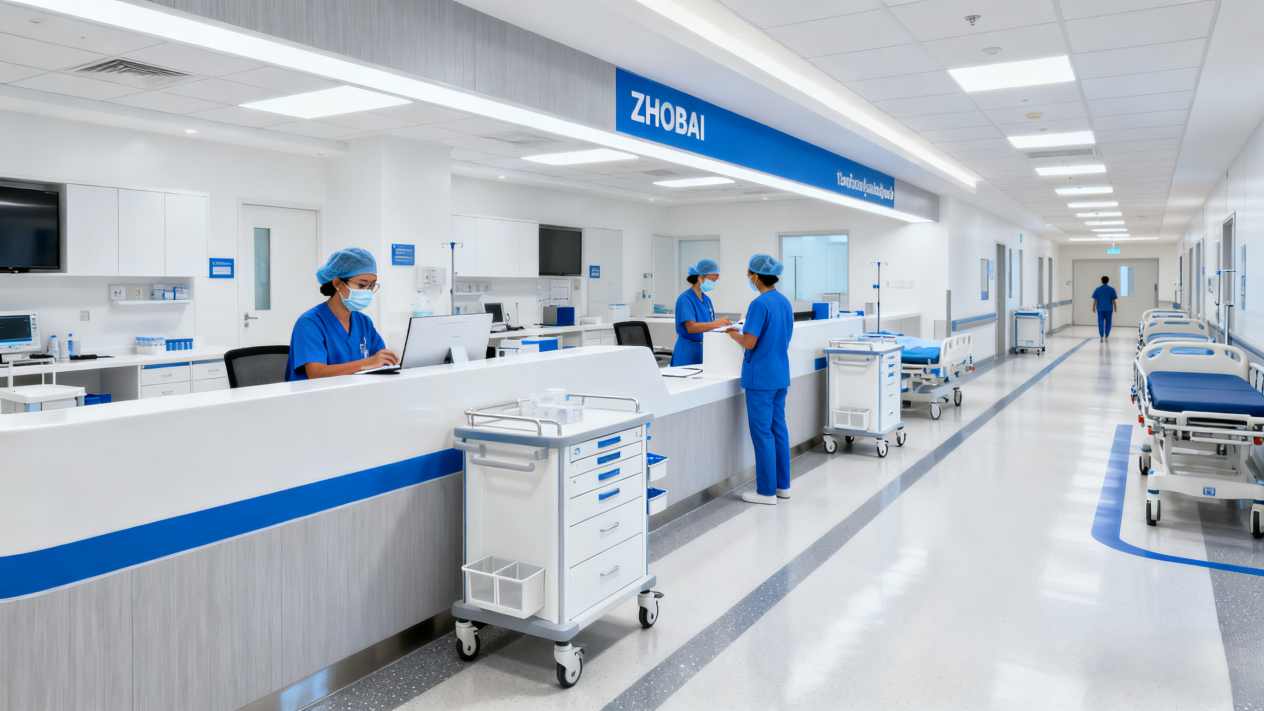
Take medical-grade antibacterial PEEK, for example. It has a similar elastic modulus to human tissue, so it’s highly biocompatible, and it kills over 95% of bacteria—including Staphylococcus aureus and Escherichia coli. Unlike wood, it stands up to repeated disinfection and won’t warp, making it perfect for operating rooms, ICUs, and other critical areas. We pair it with seamless splicing to eliminate hard-to-clean gaps, keeping sterile zones truly sanitized.
For nurse trolleys and medical trolleys—items that get doused in disinfectant every day—we use corrosion-resistant stainless steel with a nano-coating. This upgrade boosts its resistance to acids, alkalis, and rust by 40%, so the trolleys last longer even with heavy use. In outpatient and waiting areas, we opt for eco-friendly medical panels: they’re formaldehyde-free, fireproof, and wear-resistant, and we arrange them in human-centered layouts to ease patient anxiety during visits.
Craftsmanship is just as important as materials—after all, a great design only works if it’s built right. At ZHOBAI, we’ve swapped outdated manual processes for precision techniques, and our design and production teams work hand in hand to make sure every detail of the plan comes to life.
Gone are the days of manual welding, which left uneven seams that trapped dirt and bacteria. We now use robotic seamless welding: the joints are smooth and strong, eliminating sanitary dead corners and making the furniture sturdier. Our CNC precision bending machines keep errors under ±0.5mm, so nurse trolleys, medicine cabinets, and other items fit exactly into the planned space—no last-minute adjustments needed.
We also use electrostatic powder spraying with medical-grade eco-friendly powder. It adheres tightly to surfaces, resists scratches, and stands up to frequent disinfection—ideal for high-traffic areas like outpatient clinics and inpatient wards. This way, the furniture looks good, works well, and meets the strict demands of hospital environments.
“Upgrading materials and processes isn’t about spending more money—it’s about solving real problems in hospitals,” says ZHOBAI’s head of technical R&D. “By choosing the right materials and refining our craftsmanship, we help hospitals extend the life of their furniture, cut down on maintenance costs, and improve both patient care and infection control.”
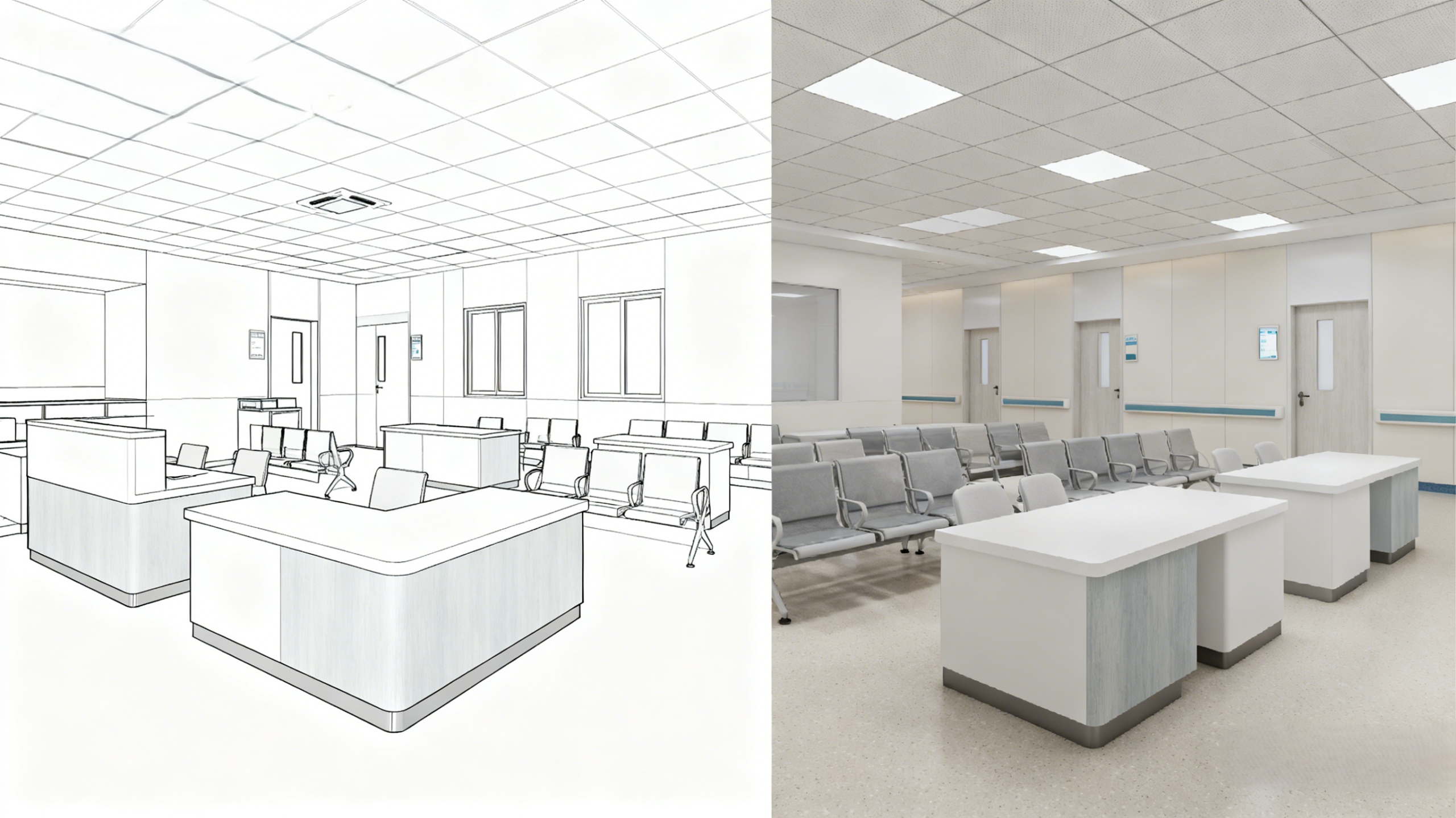
Beyond materials and craftsmanship, we integrate these elements into our design planning seamlessly. We use 3D renderings to show clients exactly how different materials will look and perform in each area, letting them tweak details before production starts. And with our complete production and supply chain system, we can mass-produce custom furniture and ship it cross-border by sea—balancing expertise, practicality, and cost-effectiveness.
What makes ZHOBAI’s one-stop solution unique is that design planning runs through every step. Early on, we use BIM technology and 3D renderings to create clear visual plans, adjusting layouts and material choices based on client needs. During production, we stick strictly to the plan to ensure consistency. Finally, we handle cross-border shipping to deliver the finished furniture on time. This end-to-end approach saves clients the hassle of coordinating multiple vendors and guarantees that the furniture and space work together perfectly.
Moving forward, ZHOBAI will keep an eye on the latest industry technologies, partner with material suppliers to develop better medical furniture materials, and refine our production processes. Our goal is to deliver higher-quality material and process solutions for hospitals worldwide, helping them build safer, more efficient, and more comfortable medical spaces.
发表回复