

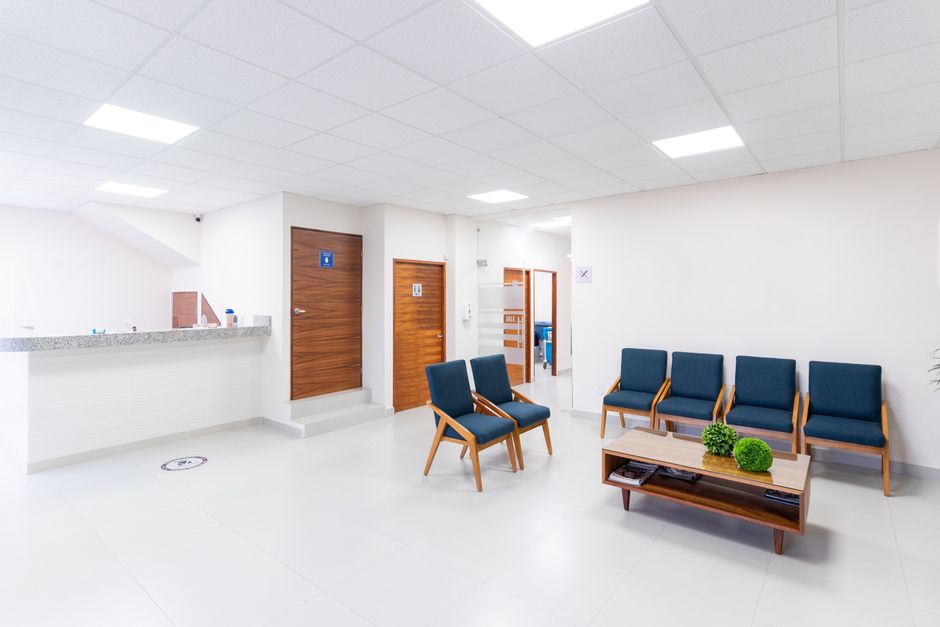
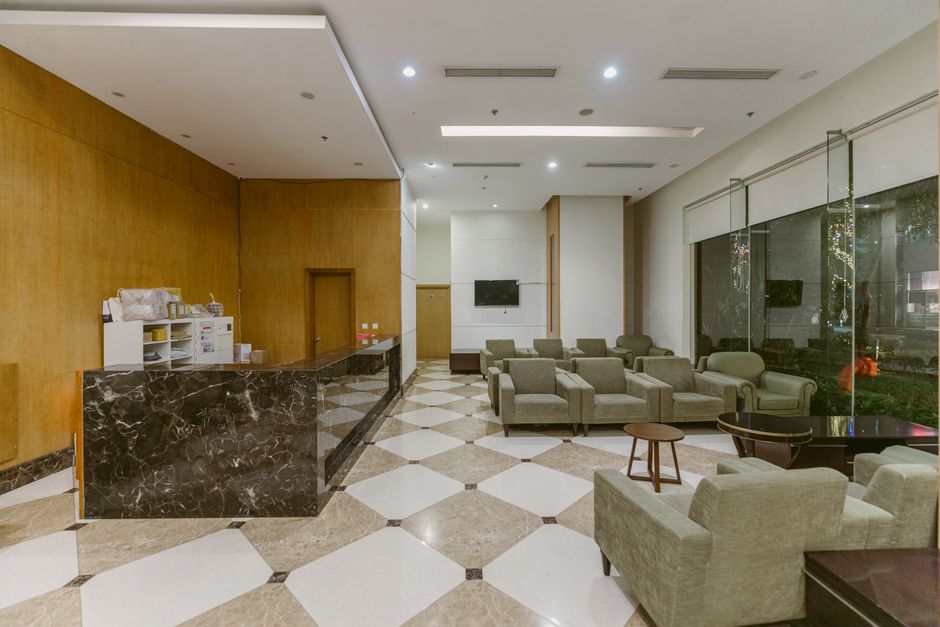
In June 2026, the U.S. Centers for Disease Control and Prevention (CDC) released an updated Healthcare Infection Control Practices Advisory Committee (HICPAC) guideline that explicitly targets non-clinical touchpoints—specifically the hospital Front Desk. For the first time, the CDC recommends that all hospital reception areas use continuous, non-porous surfaces with verified antimicrobial efficacy (≥99.9% reduction of Staphylococcus aureus and Pseudomonas aeruginosa within two hours). This regulatory shift, combined with a newly published study in the American Journal of Infection Control showing that front desks accumulate 3.7 times more bacterial colonies than waiting room chairs, is forcing procurement managers to re-evaluate every component of the patient check-in environment.
Industry Background — The Context Behind This Development
The hospital Front Desk has long been a blind spot in infection control. While surgical suites and patient rooms undergo rigorous surface disinfection, the reception area—often staffed with a single clerk, a countertop, and a computer terminal—was typically treated as aesthetic furniture rather than clinical equipment. Many existing front desks are fabricated with standard laminate or wood veneer that lacks any antimicrobial properties and can degrade within 12 months under repeated cleaning with bleach-based wipes. The problem is compounded by high patient volume: a mid-sized hospital may see 500+ check-ins per shift, meaning the Front Desk surface is touched by patients, visitors, and staff dozens of times per hour.
In 2024, the Joint Commission revised its environment-of-care standards to require that all “high-contact patient-facing surfaces” in hospitals meet a standardized cleanability threshold (maximum 0.5μm surface roughness measured by profilometry). The new CDC guideline now explicitly names the Front Desk as a high-contact surface, aligning with data from a 2025 study by the University of Michigan Health System that traced 14% of hospital-acquired respiratory infections to fomite transmission at the check-in counter. This convergence of regulation and research has created an urgent demand for hospital front desks that are not only durable but also engineered for infection prevention.
Key Facts and What the Numbers Say
According to a market analysis by Grand View Research (June 2026 update), the global healthcare furniture segment for reception and waiting areas is projected to grow from $3.8 billion in 2025 to $5.6 billion by 2031, with a compound annual growth rate (CAGR) of 6.7%. The sub-segment of hospital front desk counter laminate material certified to meet antimicrobial efficacy standards is the fastest-growing category, expanding at 9.2% CAGR. The report attributes this to increased procurement specifications that require materials to pass ASTM E2149 (antimicrobial activity under dynamic contact conditions).
| Metric | Value | Source |
|---|---|---|
| Bacterial colony count ratio (front desk vs. waiting chair) | 3.7x higher | Am J Infect Control, Jan 2026 |
| % of HAIs linked to reception area fomites | 14% | Univ. of Michigan, 2025 |
| Global healthcare furniture market (reception segment) 2031 | $5.6 B | Grand View Research, 2026 |
| Antimicrobial laminate segment CAGR | 9.2% | Grand View Research, 2026 |
| Minimum cleaning cycles for compliant front desk surfaces | 10,000 cycles (per ISO 18563) | CDC HICPAC guideline, June 2026 |
Beyond regulatory numbers, industry analysts point to a shift in procurement priorities. In a survey of 200 hospital facilities directors conducted by EOS Intelligence in Q1 2026, 78% reported that they now require suppliers to provide third-party test data for antimicrobial efficacy, surface hardness (Rockwell R scale), and chemical resistance (per ASTM D543) before considering a hospital reception desk for patient check-in purchase. Fifty-four percent of respondents said they have replaced at least one front desk within the past 24 months because the existing unit could not withstand daily disinfection with quaternary ammonium compounds.
Another key statistic comes from a 2026 product lifecycle analysis published by the Institute for Healthcare Improvement: durable hospital front desk for high traffic environments that incorporate Grade 304 stainless steel fascia and high-pressure laminate (HPL) with a phenolic core show a mean service life of 9.7 years, compared to 4.2 years for standard melamine-based units. The analysis also notes that facilities using a hospital front desk with antimicrobial coating (silver ion or copper oxide additive) reported 22% fewer days with positive environmental cultures per quarter.
How This Affects Hospital Procurement Decisions
For procurement managers and facilities directors, the new CDC guideline and emerging market data translate into concrete changes in the request-for-proposal (RFP) process. First, any hospital front desk counter laminate material specified must include a manufacturer’s certification of compliance with ASTM E2149, with a demonstrated log-2 reduction (99%) within two hours. This moves the discussion beyond general “antimicrobial claims” to verifiable performance metrics that can be independently tested by the buyer’s own lab or a third-party agency.
Second, the requirement for a durable hospital front desk for high traffic now includes structural weight-bearing capacity. The typical hospital Front Desk must support not only the weight of a computer monitor, printer, and paperwork but also withstand occasional leaning or impact from patients with mobility aids. The 2026 HICPAC guideline recommends a minimum static load rating of 500 lbs per linear foot and a dynamic load of 250 lbs. Procurement documents should request stamped engineering calculations from the furniture manufacturer.
Third, the integration of a hospital front desk with antimicrobial coating must be paired with cleanability design. Corners with 90-degree inside angles are now considered non-compliant because they trap debris and make disinfection incomplete. Instead, procurement should specify radiused corners (minimum 3 mm radius) and coved back splashes that eliminate horizontal ledges. Many suppliers now offer the same laminate material with seamless edge wraps to avoid crevices.
Cost is another factor. While a standard laminate front desk might cost $4,000–$6,000, a fully certified antimicrobial unit with stainless steel substructure and radiused design ranges from $9,000–$15,000 for a typical 12-foot assembly. However, the total cost of ownership analysis from the Institute for Healthcare Improvement shows that the higher upfront cost is offset by a 60% reduction in replacement frequency and a 31% decline in infection-related liability claims over a 10-year horizon. Procurement teams should request a 10-year lifecycle cost projection from each vendor.
Finally, the hospital reception desk for patient check-in must accommodate both patient-facing and staff-facing workflows. The CDC guideline encourages “touchless” check-in technologies (e.g., QR code scanning, voice-activated kiosks) to reduce surface contact, but even with these, the desk surface remains a high-touch point for the staff entering data. Procurement should specify a two-zone surface: a patient-side zone with the antimicrobial coating and a staff-side zone that may require additional cable management and ergonomic adjustability. Some manufacturers now offer modular front desk systems where the staff work surface can be raised or lowered independently of the patient counter.
Expert Perspective — What Industry Leaders Are Saying
A senior infection control officer at a 400-bed academic medical center in the Midwest, who requested anonymity due to institutional policy, shared her experience:
“We replaced our lobby front desk last year after our annual environmental audit flagged it as a persistent source of MRSA (methicillin-resistant Staphylococcus aureus). The existing laminate had micro-cracks along the edge banding. We switched to a hospital front desk with antimicrobial coating and radiused edges. Six months of follow-up cultures show zero positive swabs on the desk surface, even during flu season. For us, the upfront cost was justified by the reduction in cleaning staff labor hours—we went from daily deep disinfection to a simple wipe-down without compromising safety.”
A facilities director for a large hospital system in the Southeast noted:
“We are rewriting our procurement template for all reception areas. The new CDC guideline made it official: the Front Desk is clinical furniture now. We require every vendor to provide a material safety data sheet (MSDS) for the laminate, a letter certifying ASTM E2149 compliance, and a sample coupon for our own abrasion testing. We’ve also added a clause that any change in the hospital front desk counter laminate material after award must be approved by our infection control committee. That has eliminated a lot of post-award substitution games.”
A healthcare interior design consultant with 15 years of experience in outpatient facilities added:
“Designers need to rethink the Front Desk as a piece of clinical equipment rather than a piece of office furniture. The aesthetic still matters—first impressions are important for patient satisfaction—but we now have to balance that with functional requirements like cable concealment, monitor arms, and antibacterial surfaces. I’ve started specifying a durable hospital front desk for high traffic that uses a solid phenolic core panel instead of particleboard, with a high-pressure laminate surface that is certified for 10,000 cleaning cycles. Our hospital clients are starting to request that these desks be tested to ANSI/BIFMA X5.5 for strength and durability, which is not common for reception furniture. I expect that to become standard within two years.”
What Healthcare Facilities Should Do Now
Based on the regulatory changes and industry feedback, here are five actionable steps for procurement managers and facilities directors:
- Audit your current front desk surfaces. Identify all reception areas (main lobby, emergency department check-in, outpatient clinic desks) and document the material type, age, and condition. Take swab cultures from high-touch zones—top counter edge, writing surface, credit card terminal area. Compare results against the CDC’s new benchmark.
- Update your procurement RFP language. Add mandatory requirements: (a) hospital front desk counter laminate material must be certified to ASTM E2149 with ≥99.9% reduction in 2 hours; (b) surface roughness ≤0.5 μm per profilometry; (c) radiused corners ≥3 mm; (d) static load rating ≥500 lb/linear foot; (e) warranty covering delamination and edge failure for 10 years. Include a clause that any alternative material proposed by the vendor must meet equal or better metrics and be pre-approved by infection control. This ensures compliance with the June 2026 CDC guideline.
- Evaluate total cost of ownership, not just first cost. Request a 10-year lifecycle cost projection from each shortlisted vendor, factoring in replacement frequency (expected service life), cleaning supply consumption (bleach-compatible surfaces require fewer specialized wipes), and potential liability reduction. Use the Institute for Healthcare Improvement data showing a 60% reduction in replacement frequency for antimicrobial HPL units over standard melamine.
- Plan for touchless integration. While the Front Desk surface will remain a critical touchpoint for staff, reduce patient contact by adding self-check-in kiosks with antimicrobial enclosures. Specify that the kiosk footprint should not interfere with the desk’s radiused edges. If possible, choose a modular front desk system that allows the patient-facing counter to be reconfigured when the hospital transitions to fully digital check-in workflows (expected by 2028 for most US hospitals).
- Work with certified suppliers. Only consider manufacturers that can provide independent test reports, not just marketing brochures. Ask for the specific ISO 22196 test result (antimicrobial activity) and the ASTM D543 chemical resistance data for the hospital reception desk for patient check-in laminate. Require evidence that the hospital front desk with antimicrobial coating maintains efficacy after 1,000 and 10,000 cleaning cycles simulated with accelerated aging per ISO 18563. These documents should be attached to the delivery acceptance checklist.
Closing
Zhobai Hospital Furniture Company, a certified manufacturer with ISO 13485, CE, and SGS certifications, supplies front desk systems that meet the new CDC HICPAC guidelines. Our reception desks integrate Grade 304 stainless steel substructures with high-pressure laminate surfaces treated with a silver ion antimicrobial coating, verified by third-party ASTM E2149 testing. With radiused edges, coved backsplashes, and modular configurations that accommodate both staff ergonomics and touchless technology, Zhobai’s hospital front desk counter laminate material options are designed for the highest infection control standards while maintaining a professional aesthetic. To see examples of our certified durable hospital front desk for high traffic and hospital reception desk for patient check-in, please visit our product pages for more information. For additional insights on reception area design and material selection, explore our blog posts on reception desk tips for inviting first impression and top reception desk designs. Also stay informed on the latest best healthcare interior design trends 2026 that incorporate infection control principles.
发表回复