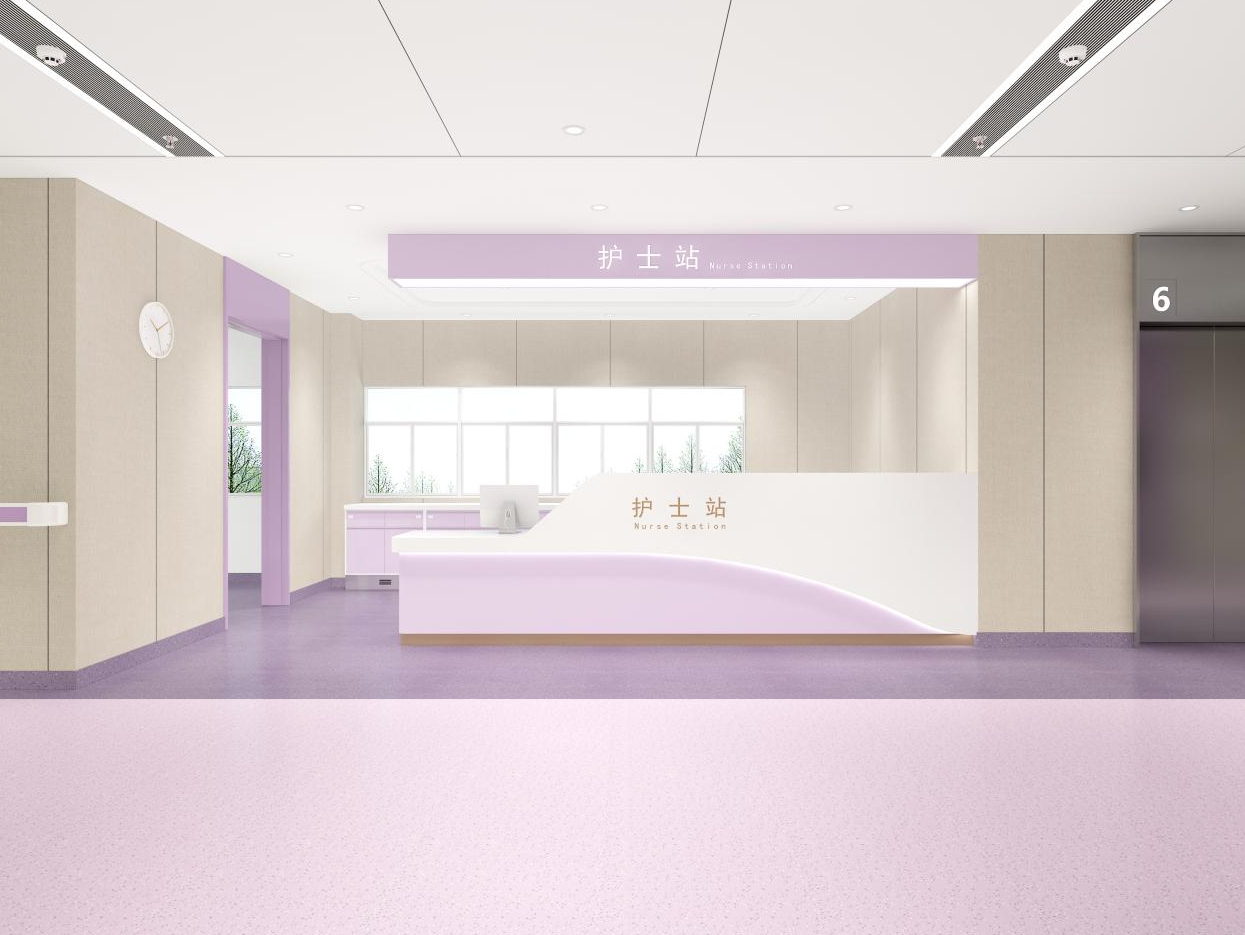
As a vital component of healthcare facilities, the hygiene of nurse stations directly impacts patient health and the work environment of healthcare staff. Steel nurse stations, with their smooth surface, resist dirt absorption and are easy to clean and disinfect, making them particularly suitable for use in high-risk areas such as operating rooms. In contrast, while wooden nurse stations offer a certain aesthetic appeal, their porous nature easily absorbs moisture and stains, making them difficult to clean and potentially breeding bacteria in humid environments.
- Durability and Safety
Steel nurse stations, due to their sturdiness, offer greater durability and impact resistance, capable of withstanding greater weight and force without breaking, thus providing a safer work environment. While wooden nurse stations can provide adequate support in certain situations, their durability is relatively low and they are susceptible to deformation or rot due to environmental factors such as humidity.
- Space Utilization and Functionality
Modern healthcare environments require nurse stations to provide more than just a basic work surface; they also need to accommodate storage, communication, and emergency response functions. Steel nurse stations are typically more advanced in design, integrating functional modules such as power outlets, storage cabinets, and lighting, improving space utilization and functionality. Wooden nurse stations, on the other hand, may be more traditional in design and less adaptable.
- Environmental Friendliness
From an environmental perspective, wood, as a renewable resource, is environmentally friendly to a certain extent. However, over-reliance on wood can lead to overexploitation of forest resources. While steel nurse stations may have some environmental impact during production, their durability and longevity mean they require less frequent replacement, potentially making them more sustainable in the long run.
- Aesthetics and Comfort
Wooden nurse stations, with their natural texture and warm tones, can create a warm and comfortable environment, helping to ease the tension of both medical staff and patients.2 Steel nurse stations, on the other hand, tend to have a simple, modern design. While they may not be as visually inviting as wood, their streamlined design and advanced craftsmanship can still provide a professional and efficient work environment.
In summary, the material selection of the nurse station should take into account multiple factors such as hygiene requirements, durability, functionality, environmental impact and aesthetics to create a safe and efficient working environment.
发表回复