标签: medical furniture compliance

  • EU Formaldehyde Limit for Medical Furniture: Compliance Guide

    EU Formaldehyde Limit for Medical Furniture: Compliance Guide

    The EU formaldehyde limit for medical furniture compliance becomes mandatory on 6 August 2026 under REACH Entry 77. This article explains exactly which hospital furniture items are affected, what test documentation to demand from suppliers, and how to avoid customs holds or market rejection for EEA projects. We focus on the buyer’s sourcing decision, not regulatory theory.

    What the 6 August 2026 EU Formaldehyde Limit Means for Your Project

    Commission Regulation (EU) 2023/1464 added Entry 77 to Annex XVII of REACH, setting a maximum formaldehyde emission of 0.062 mg/m³ for furniture and wood-based articles, and 0.080 mg/m³ for other indoor articles, measured under specific chamber conditions (23°C, 45% RH, loading factor 1 m²/m³, air exchange 1/h, up to 28 days). This applies to all 27 EU member states plus Iceland, Liechtenstein, and Norway (EEA). The regulation replaces national patchworks with a single harmonised limit. Verify the exact text in the Official Journal.

    Learn more about hospital furniture factory audit standards.

    Learn more about medical furniture material compliance testing.

    For a hospital project landing after that date, the importer bears the compliance risk. If any wood-based panel, HPL surface, foam, or adhesive emits above the limit, the finished furniture cannot be placed on the market. This is not a future concern—it is a current sourcing constraint. Your RFQ must specify the limit and require evidence from the panel manufacturer, not just a final product test.

    Hospital patient room with wooden casework and overbed table, illustrating EU formaldehyde limit medical furniture compliance
    Hospital patient room with wooden casework and overbed table, illustrating EU formaldehyde limit medical furniture compliance | ZHOBAI Medical Furniture

    Which Hospital Furniture Items Are in Scope (and the Medical-Device Exemption Myth)

    Virtually any indoor article is in scope. The regulation applies to furniture and wood-based articles, and to other indoor articles. In a typical hospital, that includes:

    • Patient room casework, bedside cabinets, overbed tables
    • Nurse station desks with HPL tops, wardrobes, wall panels
    • Seating and upholstered furniture (foam, fabric, adhesives)
    • Laminates, edge-banded panels, and any composite wood product

    The medical-device exemption under Regulation (EU) 2017/745 does not automatically exclude furniture. It only applies to products that are themselves regulated medical devices. General ward furniture, cabinets, and chairs are not medical devices and remain subject to the formaldehyde limit. Do not assume CE marking or MDR status removes the obligation—it does not.

    Exemptions Buyers Cannot Rely On for Occupied Healthcare Interiors

    The regulation exempts articles where formaldehyde is exclusively naturally present (e.g., untreated solid wood), outdoor-only products, products placed solely behind the building envelope, and articles exclusively for industrial/professional use with no foreseeable general-public exposure. Hospital furniture in occupied patient and public areas will not qualify for the industrial/professional or outdoor carve-outs. Treat these exemptions as false comfort for typical healthcare interiors. If your project includes furniture in corridors, waiting areas, or patient rooms, the limit applies.

    Compliance Evidence to Demand: Test Methods, Component Testing, and E1 Pitfalls

    ECHA issued formal measurement guidance in May 2025 describing acceptable methods: EN 717-1, EN 16516, and EN ISO 16000-9. These methods measure formaldehyde release under conditions that can be correlated to Appendix 14 reference conditions. Component or representative-part testing is permitted for whole pieces when no suitable chamber exists.

    Practical buyer asks:

    • An accredited (ISO/IEC 17025) lab report for every wood panel, HPL surface, foam, and adhesive system used.
    • The test standard and chamber conditions stated explicitly on the report.
    • A statement of the raw-materials emission value.

    Critical pitfall: an E1 label (≤0.1 ppm / ~0.124 mg/m³) is no longer automatically proof of passing. The new limit is roughly half that. A board comfortably within E1 can still fail the 0.062 mg/m³ threshold. The European Furniture Industries Confederation guidance confirms this. Demand test data that shows the actual emission value, not just a class label.
    Quality inspector reviewing emission test report for medical furniture compliance in factory
    Quality inspector reviewing emission test report for medical furniture compliance in factory | ZHOBAI Medical Furniture

    RFQ and Contract Clauses: Emission Certificates, Material Substitution, QC Milestones, and Incoterms Liability

    Your purchase contract must include a compliance clause that shifts the burden to the supplier. Specific clauses to include:

    • Emission certificate requirement: Supplier must provide a Declaration of Conformity mapping every panel lot to its emission test report.
    • Material substitution: If the supplier changes resin or adhesive systems, they must re-test and provide updated documentation.
    • QC milestones: Mid-production inspection must include a review of emission test reports and raw material certificates.
    • Incoterms liability: Clarify who bears the risk if goods are held at customs. Under EXW, the buyer assumes risk at the factory; under DDP, the seller retains responsibility until delivery. For EEA projects, DDP shifts compliance risk to the supplier.

    Also require that the supplier’s test lab is ISO/IEC 17025 accredited. The ECHA guidelines specify acceptable methods and correlation procedures. Without an accredited lab, the report may not be accepted by customs or market surveillance authorities.

    Customs and Enforcement Risk for Projects Landing After the Effective Date

    Market access is decided by the date the finished product is placed on the market. If a furniture piece with higher-emitting panels is sold in the EEA after 6 August 2026, it is non-compliant regardless of when the panels were produced. Importers and economic operators bear liability and may face holds, withdrawal, or recall. The Norwegian Environment Agency confirms that importers of such products bear the compliance obligation. For a project timeline that lands at a European port after that date, the importer—not just the Chinese factory—carries the compliance risk. Plan your shipping schedule to allow for testing and documentation review before the deadline.

    Verifying Supplier Capability: Lab Accreditation and Resin/Material Sourcing

    Evaluate the supplier’s material sourcing and coating/adhesive bill of materials. Key questions:

    • Does the supplier use urea-formaldehyde (UF) resins? If so, can they switch to lower-emitting melamine-UF, no-added-formaldehyde (NAF), or pMDI/isocyanate systems?
    • Can they provide third-party chamber-test evidence dated after the board/adhesive lots used?
    • Can they supply a Declaration of Conformity mapping every panel lot to its emission test?

    Chinese panel producers already export E1 and NAF board to the EU, so the capability exists. But you must verify it in writing. Ask for the specific resin type and the emission test report for the exact lot being used in your order. Do not accept a generic certificate from last year.

    Close-up of wood panel edge banding and HPL surface for hospital furniture, relevant to EU formaldehyde limit
    Close-up of wood panel edge banding and HPL surface for hospital furniture, relevant to EU formaldehyde limit | ZHOBAI Medical Furniture

    Action Checklist and 30-Day Sourcing Timeline for EEA Projects

    Use this checklist to structure your sourcing process:

    Timeline Action Documentation to Collect
    Day 1-5 Confirm project scope and identify all wood-based, HPL, foam, and adhesive items. Bill of materials (BOM) from your design team.
    Day 6-10 Send RFQ with explicit emission limit and test method requirements. Supplier’s proposed material list and resin types.
    Day 11-15 Evaluate supplier test reports and lab accreditation (ISO/IEC 17025). Emission test reports for each component.
    Day 16-20 Sign contract with compliance clause and QC milestones. Signed contract with Incoterms and liability terms.
    Day 21-30 Mid-production inspection and review of emission certificates. Third-party inspection report and Declaration of Conformity.

    At Zhobai, we have managed similar compliance transitions for hospital projects across Europe. Our engineering team can provide the required documentation and material traceability. But the responsibility to demand it is yours.

    Frequently Asked Questions

    Does the new limit apply to existing furniture already in use?

    No. The restriction applies to articles placed on the market after 6 August 2026. Existing furniture in use is not affected.

    Can I rely on a supplier’s E1 certificate?

    No. E1 certification is not sufficient because the new limit is stricter. You need actual emission test values from an accredited lab.

    What if my project is for a non-EEA country?

    This regulation only applies to the EEA. For other destinations, check local requirements. However, many countries are adopting similar limits, so it is prudent to meet the stricter standard.

    Prepare your sourcing now. The 6 August 2026 deadline is fixed. The EU formaldehyde limit medical furniture compliance is not a paperwork exercise—it is a material specification issue. Verify every panel, every adhesive, and every foam. Your importer license and your project timeline depend on it. If you need support, our team at Zhobai can help you navigate the documentation and material selection, but the decision to demand compliance is yours.

    Practical Steps for Overseas Buyers to Ensure EU Formaldehyde Limit Medical Furniture Compliance

    As an overseas buyer, your role extends beyond issuing a PO. You must actively manage compliance throughout the sourcing process. Here are actionable steps to integrate into your procurement workflow.

    RFQ Questions to Ask Suppliers

    When sending an RFQ, include specific questions that force suppliers to demonstrate their capability to meet the EU formaldehyde limit. This will help you shortlist compliant suppliers early.

    • What is the exact formaldehyde emission value (mg/m³) for each component, tested according to EN 717-1 or EN 16516?
    • Can you provide a Declaration of Conformity that maps each production lot to its corresponding emission test report?
    • What type of resin system do you use (UF, MUF, NAF, pMDI)? If UF, can you switch to a lower-emitting alternative for this order?
    • Is your testing laboratory ISO/IEC 17025 accredited? Please provide the accreditation certificate and scope.
    • Will you re-test if you change any raw material supplier or adhesive formulation during production?
    • Can you provide a sample of the emission test report for a recent EU-bound order?

    Document Checks Before Signing the Contract

    Before you commit, verify that the supplier’s documentation is complete and accurate. Incomplete paperwork can lead to customs delays or rejection.

    • Request a full Bill of Materials (BOM) listing every wood-based panel, HPL surface, foam, adhesive, and edge-banding material.
    • For each item in the BOM, obtain the corresponding emission test report from an accredited lab.
    • Ensure the test reports state the test method, chamber conditions, and the measured emission value, not just a pass/fail.
    • Check that the test reports are dated after the production date of the materials to be used in your order.
    • Ask for the supplier’s internal quality control procedures for verifying incoming raw materials’ emission levels.

    Approval Milestones in Your Production Schedule

    Build compliance checkpoints into your production timeline. This prevents surprises at the end and allows time for corrective actions.

    1. Pre-production meeting: Review the BOM and test reports with the supplier. Confirm that all materials meet the limit.
    2. After raw material arrival: Request certificates of analysis for the specific lots of panels and adhesives delivered to the factory.
    3. Mid-production inspection: Have a third-party inspector verify that the materials used match the approved BOM and that no substitutions have occurred.
    4. Pre-shipment inspection: Conduct a final review of all compliance documentation, including the Declaration of Conformity and test reports.

    Inspection Planning for Emission Compliance

    Your inspection plan should focus on verifying that the finished products actually meet the emission limit. While chamber testing of finished furniture is expensive, you can use surrogate checks.

    • During mid-production, take samples of raw panels and adhesives for independent testing at an accredited lab.
    • Use a handheld formaldehyde meter as a preliminary screening tool, but remember it is not a substitute for official chamber testing.
    • Ensure the inspector checks for proper edge-banding and sealing of exposed edges, as these can affect emissions.
    • Verify that the factory’s storage conditions do not introduce contamination (e.g., storing panels near solvents).

    Packaging Review to Prevent Contamination

    Packaging can affect formaldehyde levels if materials are contaminated during transit. Specify packaging requirements that protect the furniture from absorbing formaldehyde from the environment.

    • Require that furniture be wrapped in breathable, non-reactive materials (e.g., polyethylene film) that do not emit formaldehyde.
    • Ensure that packaging materials (e.g., cardboard, foam) are also low-emission and do not off-gas onto the furniture.
    • Request that the supplier use desiccants or moisture barriers if the furniture will be shipped in humid conditions, as high humidity can increase formaldehyde release.
    • Include a clause in the contract that the supplier is responsible for any damage or contamination caused by inadequate packaging.

    Handover Responsibilities and Documentation

    Clearly define who is responsible for what at each stage of the handover to avoid disputes and ensure compliance is maintained.

    • At the factory, the supplier must provide a complete compliance dossier, including all test reports, Declarations of Conformity, and a signed statement that the goods meet the EU formaldehyde limit.
    • At the port of entry, the importer (or your freight forwarder) must have the dossier ready for customs inspection. Ensure your forwarder is aware of the documentation requirements.
    • After delivery, retain all documentation for at least 10 years, as required by REACH, in case of market surveillance checks.
    • If you are using a distributor or installer, ensure they also have copies of the compliance documents and understand the importance of not altering the furniture in a way that could increase emissions.

    By integrating these practical steps into your sourcing process, you can significantly reduce the risk of non-compliance with the EU formaldehyde limit for medical furniture. Remember, the regulation is strict, but with careful planning and supplier management, you can ensure a smooth market entry.

    ZHOBAI Medical Furniture

    Ready to Apply These Principles to Your Project?

    Our engineering team responds to all project briefs within 24 hours. Share your FF&E scope — room count, property type, target timeline, and budget range — and we’ll provide a factory-direct assessment and indicative pricing within one business day.


    Send Your Project Brief →


  • France Décret 2025-1100: Fire Safety Medical Furniture Compliance

    France Décret 2025-1100: Fire Safety Medical Furniture Compliance

    France’s Décret n°2025-1100 fire safety medical furniture requirements, effective July 1, 2026, introduce mandatory reaction-to-fire classification for furnishing materials in healthcare facilities. For overseas suppliers, this means your current product certifications may no longer suffice for French projects. This article breaks down the decree’s timeline, testing obligations, and practical compliance steps you need to take before bidding on French hospital tenders.

    What Does Décret n°2025-1100 Change for Medical Furniture?

    The decree, published in the Journal Officiel on November 20, 2025, harmonizes fire-safety provisions across building types, including healthcare facilities. Its core impact on furniture is the mandatory reaction-to-fire classification of furnishing materials, as detailed by the LNE. This classification determines how materials contribute to fire growth, affecting everything from upholstery to casework.

    Learn more about hospital furniture factory audit standards.

    Previously, French fire rules for furniture in public buildings were fragmented. The new decree consolidates requirements, making compliance more predictable but also stricter. For medical furniture, the key change is that materials must now be tested and classified according to European standards (EN 13501-1) and French-specific classifications (M1, M2, etc.), depending on the application.

    From a buyer’s perspective, this means you cannot assume that furniture compliant with your home market’s standards will automatically pass French requirements. You need to verify that your supplier can provide documented test reports from accredited laboratories.

    Fire safety medical furniture testing in laboratory with sample upholstery
    Fire safety medical furniture testing in laboratory with sample upholstery | ZHOBAI Medical Furniture

    Timeline: When Do the New Rules Apply?

    Understanding the timeline is critical for project planning. The decree’s provisions came into force on July 1, 2026. However, a second phase begins on January 1, 2027, when workplace fire-safety design rules transfer to the Construction and Housing Code (CCH). This transfer may introduce additional requirements or clarify existing ones.

    For projects under design now, you must assume the new rules apply. If your project’s construction permit was filed before July 1, 2026, you may be grandfathered under old rules, but this is not guaranteed. Always confirm with the project owner or architect.

    Practical implication: if you are sourcing furniture for a French hospital project in 2026-2027, your supplier must be able to deliver test reports dated after the new standards were published. Older test reports may not be accepted.

    Key Fire-Safety Requirements for Medical Furniture

    The decree specifies reaction-to-fire classes for different furnishing materials. While the exact thresholds depend on the building’s risk category, medical furniture typically requires materials classified as M2 or better (or the equivalent Euroclass B or C). For example, upholstered seating must meet specific tests for smoldering and open flame resistance.

    According to the FFMI, the decree affects not only the final product but also the components: foam, fabric, and even the frame. This means your supplier must control the entire supply chain, not just the final assembly.

    For medical casework (cabinets, workstations), the surface materials must be non-combustible or have low flammability. High-pressure laminate (HPL) and stainless steel are common choices, but you must verify their classification.

    Testing and Certification: What You Need to Ask Suppliers

    The decree requires testing by accredited laboratories. In France, the main bodies are LNE and CERIB-Feu. These labs issue test reports that certify a product’s reaction-to-fire class. For overseas suppliers, you must ensure that your testing is done by a lab recognized in the EU, or that your existing test reports are accepted by the French authorities.

    Key questions to ask your supplier:

    • Do you have test reports from LNE or CERIB-Feu for the specific product models?
    • Are the tests current (post-2025) and do they cover the exact material composition?
    • Can you provide a declaration of performance (DoP) under the Construction Products Regulation (CPR) if applicable?

    Be wary of suppliers who claim “fire-resistant” without providing test evidence. In our experience, many Asian manufacturers have tested their products to Chinese standards (GB), which are not automatically accepted in France. You may need to budget for re-testing.

    Hospital waiting room with fire-resistant seating and signage
    Hospital waiting room with fire-resistant seating and signage | ZHOBAI Medical Furniture

    Impact on Healthcare Facility Projects in France

    For hospital projects, the new decree affects not only furniture but also the overall fire-safety strategy. Architects and fire engineers will specify furniture classes in tender documents. If your furniture does not meet these classes, you risk rejection or costly delays.

    According to Le Moniteur, the decree aims to simplify and harmonize rules, but it also raises the bar for materials. For medical furniture, this means more rigorous testing and documentation.

    From a procurement perspective, you should:

    • Include fire-safety compliance as a mandatory evaluation criterion in your RFQ.
    • Request test reports at the quotation stage, not after award.
    • Verify that the supplier’s materials are consistent with the tested configuration.

    Compliance Steps for Overseas Suppliers

    If you are a manufacturer or supplier outside France, here is a step-by-step approach:

    1. Assess your current products: Identify which furniture items fall under the decree’s scope (seating, casework, beds, etc.).
    2. Review existing test reports: Check if you have tests from EU-accredited labs. If not, plan for re-testing.
    3. Select an accredited lab: Contact LNE or CERIB-Feu to understand their testing procedures and costs. Budget for this in your pricing.
    4. Update your technical documentation: Ensure your product data sheets include fire classification and test report references.
    5. Communicate with your clients: Provide clear documentation to French buyers, including the test reports and a declaration of conformity.

    At ZHOBAI Medical Furniture, we have seen an increase in requests for fire-test documentation from French clients. Our engineering team works with accredited labs to ensure our products meet the required classifications, and we provide these reports as part of our standard documentation package.

    Comparison Table: Fire Test Standards for Medical Furniture

    Standard Region Typical Classification Relevance to Décret 2025-1100
    EN 13501-1 Europe Euroclass B, C, D Primary classification system referenced by the decree
    NF P 92-507 (M classification) France M0, M1, M2, M3, M4 French national classification, often required in addition to Euroclass
    GB 20286 China B1, B2 Not accepted in France; re-testing required
    UL 94 USA V-0, V-1, V-2 Not accepted; different test method
    Medical casework with fire classification label in French hospital
    Medical casework with fire classification label in French hospital | ZHOBAI Medical Furniture

    RFQ Checklist for Fire-Compliant Medical Furniture

    Use this checklist when requesting quotes from suppliers for French projects:

    • Request fire test reports from LNE or CERIB-Feu for each product model.
    • Verify that the report covers the exact materials and construction of the offered product.
    • Ask for the declaration of performance (DoP) if the product falls under CPR.
    • Confirm that the supplier can provide samples for independent verification.
    • Include a clause in the contract that allows you to reject non-compliant products.
    • Plan for potential re-testing costs in your budget.

    For more on material compliance, see our guide on medical furniture material compliance testing.

    Frequently Asked Questions

    Does the decree apply to all medical furniture?

    It applies to furniture in buildings subject to fire-safety regulations, including healthcare facilities. However, the specific requirements depend on the building’s risk category and the furniture’s location. Always verify with the project’s fire engineer.

    Can I use existing test reports from other countries?

    Only if the tests were conducted according to European standards by an accredited lab. Reports from other regions (e.g., China, USA) are generally not accepted.

    What is the cost of re-testing?

    Costs vary by product and lab. Budget for several thousand euros per product line. It is a worthwhile investment to avoid project delays.

    As the January 2027 transfer to the CCH approaches, staying ahead of these requirements will give you a competitive edge. At ZHOBAI, we have already aligned our production and documentation with the new French rules, ensuring our clients receive compliant furniture without surprises. Contact us to discuss your project needs.

    Understanding the Scope of the Decree for Overseas Suppliers

    For overseas suppliers, the first step is to understand the full scope of Décret n°2025-1100. The decree applies to all furnishing materials used in healthcare facilities, including beds, chairs, cabinets, and even curtains. It is essential to identify which of your products fall under this regulation. Many suppliers mistakenly believe that only upholstered items are affected, but the decree covers all materials that could contribute to fire growth. Therefore, you must review your entire product range and categorize each item based on its potential fire risk.

    Additionally, the decree requires that the classification be based on the final product as it will be used. This means that if you supply a chair with a removable cover, the cover must be tested in the same configuration as it will be sold. This is a common pitfall for suppliers who test components separately. To avoid issues, ensure that your supplier tests the complete assembly, including any coatings or finishes.

    Practical Steps for RFQ and Supplier Evaluation

    When preparing an RFQ for French projects, you should include specific questions about fire safety compliance. For example, ask for the exact test reports for each product model, including the date of testing and the laboratory that conducted it. Also, request a copy of the declaration of performance (DoP) if applicable. This document is crucial for products covered by the Construction Products Regulation (CPR).

    Another important aspect is to verify that the supplier’s test reports are still valid. Some test reports have a limited validity period, and if the product has been modified since the test, the report may no longer be applicable. Therefore, ask the supplier to confirm that the tested product is identical to the one being offered. If there have been any changes, request updated test reports.

    Furthermore, consider conducting a factory audit to verify that the supplier’s manufacturing processes are consistent with the tested specifications. This is especially important for overseas suppliers, as there may be variations in raw materials or production methods. A factory audit can help you identify potential compliance issues before they become costly problems.

    Documentation and Approval Milestones

    To ensure smooth project execution, establish clear approval milestones with your supplier. For instance, require the supplier to submit fire test reports and DoPs at the quotation stage, not after the order is placed. This will help you avoid delays and ensure that the products meet the required standards from the outset.

    Additionally, plan for third-party inspection of the products before shipment. This can be done by an independent inspection agency that verifies the fire classification and overall quality. Include this in your contract to protect your interests. The inspection should cover not only the fire safety aspects but also the general workmanship and compliance with your specifications.

    Another critical milestone is the approval of samples. Before mass production, request samples that are representative of the final product. Test these samples for fire safety, either in your own lab or through an accredited third-party lab. This will give you confidence that the production units will meet the requirements.

    Packaging and Labeling Requirements

    Fire safety compliance extends beyond the product itself to its packaging and labeling. The decree may require that the fire classification be marked on the product or its packaging. Therefore, you should discuss with your supplier how they will label the products to indicate compliance. This is particularly important for products that are sold in multiple markets, as the labeling requirements may differ.

    Additionally, consider the packaging materials themselves. While the decree focuses on the furniture, some packaging materials may also need to meet fire safety standards if they are left in the facility. To avoid any issues, use packaging that is easily removable and dispose of it promptly after installation. Include this in your handover procedures to ensure that the facility is left in a compliant state.

    Handover Responsibilities and After-Sales Support

    Finally, clarify the handover responsibilities between you, the supplier, and the end-user. The supplier should provide all necessary documentation, including test reports, DoPs, and installation instructions. You should also ensure that the supplier offers after-sales support in case of any issues with the fire safety performance of the products.

    It is also advisable to include a clause in the contract that holds the supplier liable for any non-compliance discovered after installation. This will give you recourse if the products fail to meet the required standards. Additionally, consider requiring the supplier to provide a warranty that covers fire safety performance for a specified period.

    By taking these practical steps, you can navigate the complexities of Décret n°2025-1100 and ensure that your medical furniture meets the highest fire safety standards for French healthcare projects.

    ZHOBAI Medical Furniture

    Ready to Apply These Principles to Your Project?

    Our engineering team responds to all project briefs within 24 hours. Share your FF&E scope — room count, property type, target timeline, and budget range — and we’ll provide a factory-direct assessment and indicative pricing within one business day.

    Send Your Project Brief →


  • Hospital Furniture Cleanability Compliance: BIFMA G8.1-2026 Guide

    Hospital Furniture Cleanability Compliance: BIFMA G8.1-2026 Guide

    When you source hospital furniture from China, cleanability and disinfection resistance are not optional features. The updated BIFMA G8.1-2026 guideline formalizes what healthcare specifiers should demand, and your RFQ must reflect that. This article explains what the guideline changes, which test criteria to hold suppliers to, and how to verify compliance during factory inspections—so your hospital furniture cleanability compliance is documented, not assumed.

    What BIFMA G8.1-2026 Changes and What It Does Not Require

    Published on February 20, 2026, BIFMA G8.1-2026 expands the Furniture Surfaces Guideline beyond healthcare to commercial settings. It introduces a tiered conformance approach: healthcare and commercial use have different expectations. For healthcare, the guideline references test protocols similar to BIFMA HCF 8.1, which specify common disinfectants and acceptance criteria. For commercial, the requirements are less stringent.

    Learn more about material compliance testing.

    Learn more about factory audit standards.

    Critically, BIFMA G8.1-2026 is voluntary. It is not a law or a mandatory standard. However, it is widely referenced in healthcare procurement and accreditation frameworks such as JCI and DNV. If your project requires JCI accreditation, your furniture must meet cleanability expectations that align with this guideline.

    What the guideline does NOT do: it does not mandate a specific material or finish. It does not set pass/fail thresholds for all settings—those depend on the tier and the disinfectants you specify. It also does not cover structural durability or safety; those are separate standards.

    For your sourcing decision, this means you must specify the tier (healthcare vs. commercial) and the disinfectants you will use. Do not accept a generic “cleanable” claim. Demand evidence that matches your clinical environment.

    Hospital furniture cleanability compliance test report on a desk with disinfectant wipes
    Hospital furniture cleanability compliance test report on a desk with disinfectant wipes | ZHOBAI Medical Furniture

    The Cleanability Test Matrix: Which Disinfectants and Acceptance Criteria to Demand

    BIFMA G8.1-2026 references test protocols similar to BIFMA HCF 8.1. According to Micom Laboratory, the test agents include bleach (sodium hypochlorite), hydrogen peroxide, quaternary ammonium, isopropyl alcohol, and phenolic reagents. These are the disinfectants used in hospitals worldwide.

    Acceptance criteria typically include:

    • No visible cracking, delamination, or blistering after repeated cleaning cycles.
    • Color change (delta E) ≤ 2.0 after exposure.
    • No loss of gloss or surface integrity that would harbor microbes.

    When you write your RFQ, specify the exact disinfectants your facility uses. For example, if your housekeeping protocol relies on bleach, demand a test report showing resistance to bleach. If you use quaternary ammonium wipes, demand that test. Do not accept a report that only tested alcohol.

    Ask for the test report from an accredited laboratory. The report should state the number of cycles, the concentration of the disinfectant, and the acceptance criteria. If the supplier cannot provide this, treat it as a red flag.

    Touchless Disinfection: UVC, Fogging, and Electrostatic Spraying

    BIFMA G8.1-2026 acknowledges touchless disinfection methods: UVC, fogging, and electrostatic spraying. These are increasingly common in hospitals because they disinfect surfaces without manual wiping. However, they can degrade furniture materials over time.

    UVC light can cause discoloration and embrittlement of plastics and coatings. Fogging and electrostatic spraying introduce moisture and chemicals that can penetrate edges and seams. If your facility uses any of these methods, you must verify that your furniture can withstand repeated exposure.

    Ask your supplier for evidence of UVC resistance. This may be a test report from a lab or a manufacturer’s statement based on material selection. For example, powder-coated steel and high-pressure laminate (HPL) are generally more resistant to UVC than painted MDF or melamine. But you need proof, not assumptions.

    During factory inspection, check for uncoated edges, crevices, or seams where moisture could accumulate. These are weak points for fogging and electrostatic spraying. A well-designed piece will have sealed edges and minimal gaps.

    Factory inspector checking edge sealing on a hospital cabinet for cleanability compliance
    Factory inspector checking edge sealing on a hospital cabinet for cleanability compliance | ZHOBAI Medical Furniture

    How to Write Cleanability Requirements into Your RFQ and Inspection Checklist

    Your RFQ should include a dedicated section on cleanability and disinfection resistance. Here is a clause you can adapt:

    “Supplier must provide test reports from an accredited laboratory demonstrating surface resistance to [list disinfectants] per BIFMA G8.1-2026 or equivalent. Reports must include number of cycles, concentration, and acceptance criteria (e.g., delta E ≤ 2.0, no cracking). Materials must match the tested samples exactly. Any deviation requires re-testing.”

    During factory inspection, verify that the materials used in production match the tested samples. Check the powder coating thickness, the grade of HPL, and the edge banding. A common issue is that suppliers test a premium sample but ship a lower-grade product. Inspect the actual production line, not just the showroom.

    Also, verify that there are no uncoated edges or crevices. Use a flashlight to inspect corners and joints. If you find exposed MDF or particleboard, reject the batch—it will absorb moisture and harbor pathogens.

    Reconciling with CE/FDA and Destination-Market Regulations

    BIFMA G8.1-2026 is voluntary, but CE marking and FDA clearance may apply to certain furniture. For example, examination tables and other medical devices may require CE marking under the Medical Device Regulation (MDR). However, general hospital furniture—beds, overbed tables, chairs, casework—often falls outside strict CE/FDA requirements. The obligation depends on the product classification and intended use.

    For example, a simple bedside cabinet is not a medical device. But a powered examination table may be. You must determine the classification for each product in your destination market. Do not assume that all medical furniture requires CE or FDA. Instead, work with a compliance specialist or your supplier to confirm.

    Even when CE/FDA does not apply, cleanability is a key expectation in healthcare accreditation. JCI and DNV standards require that furniture be cleanable and maintainable. BIFMA G8.1-2026 provides a benchmark for meeting those expectations. Align your RFQ with the accreditation standards of your target market.

    Hospital room with cleanable furniture surfaces and UVC disinfection unit
    Hospital room with cleanable furniture surfaces and UVC disinfection unit | ZHOBAI Medical Furniture

    How China’s Supply Chain Maturity Affects Your Sourcing

    China has implemented GB/T 46489-2025, a national standard for hospital furniture, effective May 1, 2026. According to the National Standards of the People’s Republic of China, this standard includes antibacterial performance requirements. The Shanghai Institute of Quality Inspection and Technical Research interprets that antibacterial rate must be ≥90%. This indicates that Chinese suppliers are increasingly capable of meeting rigorous cleanability standards.

    However, GB/T 46489 is a domestic standard, not an international one. It does not replace BIFMA G8.1-2026. You should still demand BIFMA-aligned test reports. But the existence of GB/T 46489 shows that leading Chinese factories have the testing infrastructure and material knowledge to meet your requirements.

    When evaluating suppliers, ask if they are familiar with GB/T 46489 and BIFMA G8.1-2026. A supplier who can discuss both is likely more mature. Also, ask for their testing capabilities in-house. Many factories have their own labs for quick screening, but third-party accreditation is still essential.

    Decision Checklist: What to Verify Before You Sign

    Use this checklist during supplier evaluation and pre-shipment inspection:

    Checkpoint What to Verify Why It Matters
    Test reports Accredited lab report for each disinfectant you use Proves surface resistance, not just a claim
    Material match Production materials match tested samples Prevents substitution of lower-grade materials
    Edge sealing No exposed MDF or particleboard edges Prevents moisture absorption and microbial growth
    Touchless disinfection Evidence of UVC/fogging resistance if used Avoids premature degradation
    Accreditation alignment JCI/DNV requirements for cleanability Ensures accreditation pass
    Factory inspection Inspect production line, not just showroom Verifies actual quality control

    At ZHOBAI Medical Furniture, we have managed hospital furniture projects from factory floor to installation for over 15 years. Our engineering team can provide third-party QC reports at the mid-production milestone and has shipped to destinations across Europe, Central Asia, Southeast Asia, North America, South America, and Africa. We are familiar with BIFMA G8.1-2026 and GB/T 46489-2025, and we can produce test reports from accredited labs for your specified disinfectants.

    When you evaluate suppliers, ask for their experience with your destination market’s accreditation standards. A supplier who has shipped to JCI-accredited hospitals will understand the documentation and inspection requirements. Do not settle for a supplier who cannot provide evidence of cleanability compliance.

    Frequently Asked Questions

    Is BIFMA G8.1-2026 mandatory for hospital furniture?

    No, it is voluntary. However, it is widely referenced in healthcare procurement and accreditation. If your project requires JCI or DNV accreditation, you should align with BIFMA G8.1-2026 to meet cleanability expectations.

    What if my supplier only has GB/T 46489 test reports?

    GB/T 46489 is a Chinese national standard that includes antibacterial requirements. It is a good baseline, but it does not cover the full range of disinfectants or acceptance criteria in BIFMA G8.1-2026. You should request BIFMA-aligned test reports or equivalent evidence.

    Can I specify my own acceptance criteria?

    Yes. You can define the disinfectants, number of cycles, and acceptable surface changes in your RFQ. The key is to be specific and demand evidence from an accredited lab.

    In summary, hospital furniture cleanability compliance is a documented, verifiable requirement. Use BIFMA G8.1-2026 as your benchmark, specify your disinfectants, and verify with third-party test reports and factory inspections. This approach protects your investment and ensures your facility meets infection-control standards.

    Deepening Your Cleanability Compliance Strategy: Practical Steps for Overseas Buyers

    When sourcing hospital furniture from China, ensuring cleanability compliance goes beyond simply requesting a test report. As an overseas buyer, you need to integrate compliance checks into every stage of your procurement process—from RFQ to handover. This section provides actionable steps to strengthen your quality assurance and avoid costly mistakes.

    RFQ Development: Asking the Right Questions

    Your RFQ is the foundation of compliance. Beyond listing disinfectants, include specific questions that force suppliers to demonstrate their understanding of cleanability. For example:

    • What is your standard edge sealing method for HPL or laminate surfaces? Do you use PVC edge banding, ABS, or a sealed edge with a waterproof adhesive?
    • Can you provide a cross-section diagram of the panel construction, showing the core material and edge treatment?
    • What is the powder coating thickness on metal frames? Is it within the range that ensures no pinholes or bare spots?
    • Do you offer a warranty that covers surface degradation due to disinfectant exposure? If so, what is the duration and what does it cover?
    • Can you share a sample of your in-house QC checklist for cleanability-related attributes?

    These questions prompt suppliers to reveal their manufacturing processes and quality controls, giving you insight into their capability to meet your requirements.

    Document Verification: Beyond the Test Report

    While a test report is crucial, you should also verify supporting documents. Request the following:

    • Material data sheets for all surfaces, including the specific grade of HPL, PVC, or powder coating.
    • Certificate of analysis for the powder coating or laminate, confirming the absence of harmful substances and compliance with REACH or other regulations.
    • Inspection reports from the factory’s internal quality team, showing that they check for edge sealing and surface defects.
    • If the supplier uses a third-party lab, ask for the lab’s accreditation certificate (e.g., ISO 17025) to ensure the test is reliable.

    Cross-check the information on these documents with the actual product during inspection. For instance, if the data sheet says the HPL is 1.2mm thick, verify it with a caliper.

    Approval Milestones: Building Compliance into the Timeline

    Do not wait until final inspection to check cleanability. Establish approval milestones during production:

    1. Pre-production meeting: Review the RFQ requirements, test reports, and material specifications. Confirm that the supplier understands your expectations.
    2. First article inspection (FAI): After the first unit is produced, inspect it for edge sealing, surface quality, and any signs of poor workmanship. This is your chance to catch issues early.
    3. Mid-production inspection: Visit the factory or hire a third-party inspector to check that the production line is using the correct materials and processes. Randomly select units for surface testing.
    4. Pre-shipment inspection: Conduct a final random sampling to ensure that the finished goods meet all cleanability criteria. Use AQL (Acceptable Quality Limit) standards for sampling.

    Each milestone should have a clear pass/fail criteria. If a unit fails, the supplier must correct the issue and re-inspect before proceeding.

    Inspection Planning: What to Check on the Factory Floor

    During inspections, focus on the following cleanability-related aspects:

    • Edge sealing: Use a flashlight to inspect all edges, corners, and cutouts. Look for any exposed substrate, gaps, or uneven sealing.
    • Surface finish: Check for scratches, dents, or blisters that could harbor bacteria. Run your hand over the surface to feel for roughness.
    • Hardware and fasteners: Ensure that screws and bolts are recessed or covered with caps to prevent moisture accumulation.
    • Seams and joints: For casework, check that seams are tight and sealed. For upholstered items, verify that seams are sealed with a waterproof barrier.
    • Castors and glides: If furniture has castors, ensure they are sealed and do not have exposed metal that could rust.

    Take photos and notes to document any issues. If you find a problem, discuss it with the factory manager and agree on a corrective action plan.

    Packaging Review: Protecting Cleanability During Transit

    Packaging can affect cleanability if it damages the surface. Review the packaging specifications:

    • Ensure that furniture is wrapped in protective foam or paper to prevent scratches.
    • Check that corners and edges are protected with cardboard or foam corners.
    • Verify that the packaging is moisture-resistant to prevent condensation during shipping.
    • If furniture is shipped flat-packed, ensure that all components are properly separated to avoid rubbing.

    During pre-shipment inspection, open a few packages to check the condition of the furniture. If you find damage, request that the supplier improve the packaging.

    Handover Responsibilities: Documentation and Training

    At handover, you should receive a compliance dossier that includes:

    • All test reports and certificates.
    • Material data sheets.
    • Inspection reports from each milestone.
    • Cleaning and maintenance instructions for your housekeeping staff.

    Ensure that the supplier provides training or a detailed guide on how to clean and disinfect the furniture without damaging it. This is especially important if you use touchless disinfection methods. The guide should specify which disinfectants are safe and which to avoid.

    Also, clarify the warranty terms. Does the warranty cover surface degradation due to disinfectant use? If not, negotiate for an extended warranty or a service agreement.

    Building a Long-Term Compliance Relationship

    Finally, consider establishing a long-term relationship with your supplier to ensure ongoing compliance. Regular audits and open communication can help you address any changes in materials or processes that might affect cleanability. By integrating these practical steps into your sourcing strategy, you can confidently achieve hospital furniture cleanability compliance that is documented, verified, and sustainable.

    ZHOBAI Medical Furniture

    Ready to Apply These Principles to Your Project?

    Our engineering team responds to all project briefs within 24 hours. Share your FF&E scope — room count, property type, target timeline, and budget range — and we’ll provide a factory-direct assessment and indicative pricing within one business day.

    Send Your Project Brief →


  • Material Compliance Testing: 7-Step Report Verification

    Material Compliance Testing: 7-Step Report Verification

    A laboratory report is not proof that every cabinet in a shipment uses the tested material. The report may be genuine but apply to a different thickness, colour, coating, production site, or sample supplied years earlier. Material compliance therefore depends on two questions: is the report technically valid, and can the tested sample be traced to the material actually purchased and installed? This is the core of medical furniture material compliance testing — a discipline that separates procurement teams who control risk from those who inherit it. In this guide, we walk through the traps, the verification steps, and the evidence chain that links a certificate to the installed product.

    1. Three Material Substitution and Report Misuse Traps

    Most substitution problems in hospital projects fall into three categories. Each one has a specific verification response.

    Learn more about hospital furniture factory audit standards.

    Learn more about how to choose a bespoke hospital furniture manufacturer.

    HPL vs. Compact Laminate

    Ordinary HPL is a decorative surface layer, typically bonded to a substrate such as MDF or particleboard. Compact laminate, by contrast, is a solid phenolic sheet built from multiple layers of kraft paper impregnated with thermosetting resins. The difference matters because thickness, core structure, and edge behaviour determine chemical resistance and moisture performance. A report for a 0.8 mm HPL surface says nothing about a 12 mm compact laminate counter. When reviewing phenolic laminate lab test reports, check the product structure, thickness, core colour, resin system, and EN 438 category. A generic description such as “waterproof phenolic” is not a specification.

    Stainless Steel 201 vs. 304

    Corrosion resistance depends on alloy composition, surface finish, chloride exposure, welding, crevices, and cleaning chemicals. A magnet test cannot identify a grade. The only reliable evidence is a mill test certificate (MTC) with the heat number, plus random verification using PMI/OES/XRF on incoming batches. For coastal or high-chloride environments, specify 316L and verify accordingly. Do not accept “201 never rusts” or “304 is immune” — both are false.

    Antimicrobial and Fire Report Mismatches

    Antimicrobial claims often come from a test on a small coupon, not the actual production surface. Fire classifications are even more dangerous: a classification for a single laminate thickness does not cover a complete cabinet with different adhesives, cores, and construction. Always verify that the report sample matches the product model, thickness, and surface finish.

    Technician inspecting a compact laminate cross-section with a thickness gauge during medical furniture material compliance testing
    Technician inspecting a compact laminate cross-section with a thickness gauge during medical furniture material compliance testing | ZHOBAI Medical Furniture

    2. Seven-Step SOP for Authenticating Third-Party Reports

    Report authenticity is not a binary yes/no. Use this seven-step procedure to verify a laboratory document before you rely on it.

    Step Action
    1. Verify the Issuer Check the laboratory’s legal name, address, and contact details. Do not rely on logos alone.
    2. Verify Accreditation and Scope Confirm ISO/IEC 17025 accreditation and that the specific test method is within the scope.
    3. Verify Report Authenticity Use the laboratory’s official verification channel or contact them directly. Do not use links provided by the supplier.
    4. Match the Sample Identity Ensure sample name, model, thickness, colour, batch, photo, and client name match the purchased product.
    5. Check Method and Edition Verify standard number, version, deviations, pre-treatment, test conditions, and sample count.
    6. Interpret Results Correctly Distinguish measured values, classifications, pass/fail, uncertainty, and remarks. Do not extend results to untested properties.
    7. Connect Report to Production Bind the report sample to approved sample, BOM, purchase order, incoming batch, production records, and field sampling.

    Each step closes a gap. For example, a report with a valid QR code may still be out of scope if the method is not listed in the accreditation schedule. Always cross-check the ILAC MRA signatory directory and the national accreditation body’s database.

    Quality engineer verifying stainless steel grade with a PMI analyzer on a hospital cabinet frame
    Quality engineer verifying stainless steel grade with a PMI analyzer on a hospital cabinet frame | ZHOBAI Medical Furniture

    3. On-Site Material Verification and Random Sampling

    Verification does not stop at the report. On-site inspection and sampling are essential to confirm that the delivered material matches the approved sample and the report.

    Sealed Samples and Batch Traceability

    Before production, seal a representative material sample and record the manufacturer, product code, thickness, colour, surface, batch, and report number. This sealed sample becomes the reference for all later checks. During production, maintain a chain of custody: record box numbers, cabinet numbers, batch codes, photographs, and seals. If a supplier cannot show this traceability, treat the report as unverified.

    Field Screening vs. Laboratory Testing

    Simple field checks can catch obvious anomalies: thickness and dimensions, labels and batch codes, cross-section structure, surface colour, edge banding integrity, and random PMI on metal parts. But destructive tests like boiling water, open flame, or concentrated acid drops are not substitutes for standardized laboratory methods. They can be dangerous, damage samples, and produce misleading conclusions. Send samples to a qualified laboratory for antimicrobial activity, formal fire classification, chemical resistance, VOC/formaldehyde, structural performance, and water absorption/thickness swelling.

    Procurement team reviewing a laboratory report and sealed material samples in a meeting room
    Procurement team reviewing a laboratory report and sealed material samples in a meeting room | ZHOBAI Medical Furniture

    4. Evidence Matrix for Fire, Antimicrobial, and Chemical Resistance

    Different claims require different evidence. The table below summarises the minimum evidence, common misreadings, and field verification for four material categories.

    Material/Claim Minimum Evidence Common Misreading Field Verification
    Antimicrobial surface ISO 22196 test report with organism, contact time, control, and result Treating a test method as a certification; claiming infection prevention Check surface layer/coating batch and durability after abrasion
    Phenolic compact laminate Product TDS, structure/thickness, EN 438 or project standard, SEFA 8-PH/SEFA 3 if applicable Treating all HPL as the same; claiming 100% waterproof and chemical-proof Inspect cross-section, thickness, core colour, label, batch, edge banding
    Stainless steel Mill test certificate, grade/standard, surface finish, batch; PMI/OES/XRF if needed Using a magnet test; assuming 304 is immune to corrosion Random composition verification and match with heat number
    Fire retardant Project regulation, product category, end-use, test and classification report, scope Assuming a material sample B-s1,d0 covers the whole cabinet; cross-applying BS/EN Verify thickness, substrate, adhesive, finish, and installation match report

    Fire compliance cannot be selected from a global menu of attractive classifications. The required standard depends on the jurisdiction, product category, installation, and end-use application. A classification obtained for one laminate thickness or substrate should not be assumed to cover a complete cabinet with different adhesives, cores, and construction details. Always confirm the project’s fire retardant medical cabinetry standards before specifying.

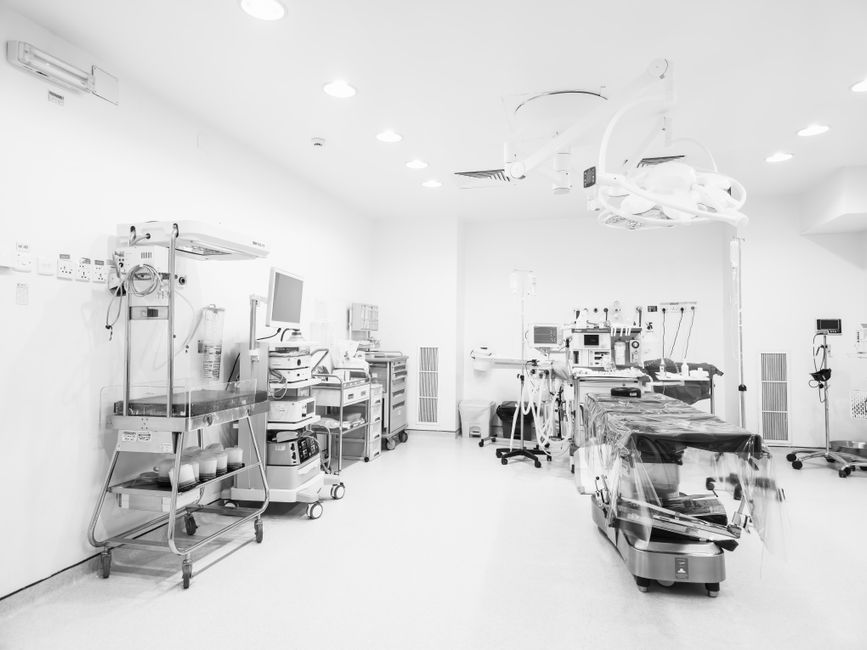
    Close-up of advanced medical equipment in a sterile operating room setting.
    Close-up of advanced medical equipment in a sterile operating room setting | ZHOBAI Medical Furniture

    5. Contractual Risk Control and Financial Model

    Material nonconformance has a cost. The exposure includes removal, replacement, retesting, expedited logistics, site remobilization, delay overhead, and regulatory or contract consequences. A realistic illustrative scenario: 200 affected rooms, unit removal and reinstallation at $1,200 each, retesting and expedited logistics at $25,000, and a 30-day project extension at $5,000 per day. That totals $390,000. These are assumptions, not industry averages. The value of material auditing is to reduce the probability of high-impact nonconformance entering production and the site. Use your own test costs, replacement costs, and risk probability to calculate ROI.

    Contractually, define the nonconformance process: the retest laboratory, acceptance criteria, disputed sample handling, segregation, stop-production authority, rework or replacement, freight, schedule impact, and claims. Liquidated damages percentages should be reviewed by legal counsel in the target market.

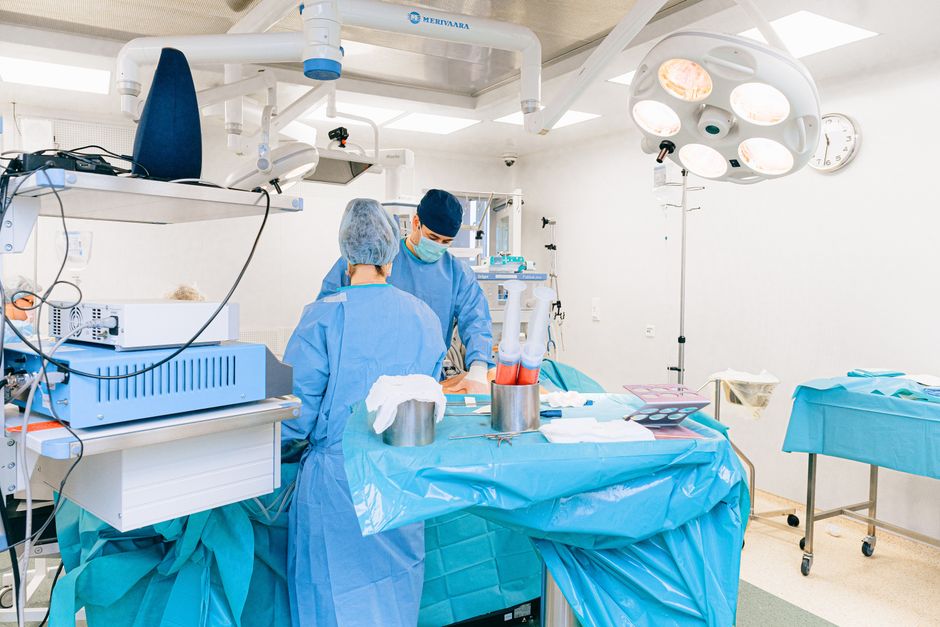
    Surgeons in an operating room performing medical procedures with precision and care.
    Surgeons in an operating room performing medical procedures with precision and care | ZHOBAI Medical Furniture

    6. Supplier Material Compliance Audit: Three-Step Method

    Implement a three-step audit to verify that the supplier’s material compliance system works.

    Step 1 – Approved Sample and Evidence Lock-in

    Before contract signing, seal a representative material sample. Record manufacturer, product code, thickness, colour, surface, batch, and report number. Attach the approved data sheet and test evidence matrix. The sample is not the only basis; it must be linked to the specification.

    Step 2 – Risk-Based Random Sampling

    Sample at three points: incoming raw material, during production, and at site arrival. Sampling must be witnessed by both parties or an independent party. Record box numbers, cabinet numbers, batch codes, photographs, and seals. Maintain the chain of custody.

    Step 3 – Contractual Nonconformance Process

    The contract must specify the retest laboratory, decision rules, dispute sample handling, segregation, stop-production, rework/replacement, freight, schedule impact, and claims. This process protects both parties and ensures a clear path when nonconformance is found.

    Crop smiling young ethnic female doctor in medical uniform with stethoscope and notebook standing in modern medical room with panoramic window
    Crop smiling young ethnic female doctor in medical uniform with stethoscope and notebook standing in modern medical room with panoramic window | ZHOBAI Medical Furniture

    7. Report Verification Checklist for Procurement Teams

    Use this checklist when evaluating any supplier report. Each line has a pass condition and a risk signal.

    Check Item Pass Condition Risk Signal
    Report authenticity Verified via official laboratory channel QR code leads to non-official domain; number not traceable
    Laboratory accreditation ISO/IEC 17025 and method in scope Only CNAS/ILAC logo, method not in scope
    Sample identity Model, thickness, colour, batch, photo match purchased material Report says “generic sample” with no product code
    Standard and version Method and version meet project requirements Withdrawn version or wrong product category
    Results vs. claims Marketing claims do not exceed report results 99% written as 99.9%; antibacterial written as anti-infection
    Report applicability Thickness, structure, finish, installation match production Single small-sample report covers different material systems
    Batch traceability Report sample traceable to BOM, incoming, and production batch Sample prepared by supplier alone with no batch relation

    This checklist is a practical tool for verifying healthcare furniture material specs. It is not a substitute for professional judgement, but it forces the right questions.

    Crop cheerful ethnic female doctor in medical uniform and stethoscope holding hands crossed standing in modern clinic corridor with glass wall
    Crop cheerful ethnic female doctor in medical uniform and stethoscope holding hands crossed standing in modern clinic corridor with glass wall | ZHOBAI Medical Furniture

    8. The Limits of Simple Field Tests

    Field tests like boiling water, direct flame, concentrated acid drops, or magnet tests cannot replace laboratory analysis. They may be useful for screening, but they can be dangerous and misleading. For example, a magnet test on stainless steel will not distinguish 201 from 304, and boiling water may not reveal the true water absorption of a phenolic panel. Always send samples to an accredited laboratory for formal testing. This is a core principle of medical furniture material compliance testing.

    9. How ZHOBAI Approaches Material Compliance

    At ZHOBAI Medical Furniture, we have managed hospital projects from factory floor to installation for over 15 years. Our engineering team prepares a project-specific evidence matrix for each material, linking the specification, approved sample, laboratory report, purchase order, incoming batch, and production records. We do not claim blanket certifications; we provide the applicable third-party evidence for each material and thickness. For example, our ISO 22196 test reports are for specific products and organisms, not a general “certification”. We also verify stainless steel grades with MTC and random PMI, and we maintain chain-of-custody documentation for all samples.

    This approach is part of our broader commitment to transparent procurement. If you are evaluating a bespoke hospital furniture manufacturer, we recommend you apply the same scrutiny to any supplier, including us. Our factory audit standards and project references are available for review.

    10. Conclusion: The Evidence Chain Is the Defence

    The strongest defence against material substitution is not a single certificate. It is a controlled evidence chain linking the specification, approved sample, laboratory report, purchase order, incoming batch, production record, and independent verification. When you receive a report, ask not only “is it genuine?” but also “does it apply to this material, and can I trace it to what I am buying?” This is the essence of medical furniture material compliance testing. By following the steps in this guide, you can reduce the risk of nonconformance and protect your project’s schedule, budget, and safety.

    Send ZHOBAI your material specification, room types, required test standards, and approved cleaning chemicals. Our team can prepare a project-specific evidence matrix showing which reports apply to each material, where additional testing is required, and how approved samples can be linked to production batches. Final acceptance remains subject to the project specification, local regulations, and verification by the appointed consultant or authority.

    ZHOBAI Medical Furniture

    Ready to Apply These Principles to Your Project?

    Our engineering team responds to all project briefs within 24 hours. Share your FF&E scope — room count, property type, target timeline, and budget range — and we’ll provide a factory-direct assessment and indicative pricing within one business day.

    Send Your Project Brief →