标签: hospital furniture

  • France Décret 2025-1100: Fire Safety Medical Furniture Compliance

    France Décret 2025-1100: Fire Safety Medical Furniture Compliance

    France’s Décret n°2025-1100 fire safety medical furniture requirements, effective July 1, 2026, introduce mandatory reaction-to-fire classification for furnishing materials in healthcare facilities. For overseas suppliers, this means your current product certifications may no longer suffice for French projects. This article breaks down the decree’s timeline, testing obligations, and practical compliance steps you need to take before bidding on French hospital tenders.

    What Does Décret n°2025-1100 Change for Medical Furniture?

    The decree, published in the Journal Officiel on November 20, 2025, harmonizes fire-safety provisions across building types, including healthcare facilities. Its core impact on furniture is the mandatory reaction-to-fire classification of furnishing materials, as detailed by the LNE. This classification determines how materials contribute to fire growth, affecting everything from upholstery to casework.

    Learn more about hospital furniture factory audit standards.

    Previously, French fire rules for furniture in public buildings were fragmented. The new decree consolidates requirements, making compliance more predictable but also stricter. For medical furniture, the key change is that materials must now be tested and classified according to European standards (EN 13501-1) and French-specific classifications (M1, M2, etc.), depending on the application.

    From a buyer’s perspective, this means you cannot assume that furniture compliant with your home market’s standards will automatically pass French requirements. You need to verify that your supplier can provide documented test reports from accredited laboratories.

    Fire safety medical furniture testing in laboratory with sample upholstery
    Fire safety medical furniture testing in laboratory with sample upholstery | ZHOBAI Medical Furniture

    Timeline: When Do the New Rules Apply?

    Understanding the timeline is critical for project planning. The decree’s provisions came into force on July 1, 2026. However, a second phase begins on January 1, 2027, when workplace fire-safety design rules transfer to the Construction and Housing Code (CCH). This transfer may introduce additional requirements or clarify existing ones.

    For projects under design now, you must assume the new rules apply. If your project’s construction permit was filed before July 1, 2026, you may be grandfathered under old rules, but this is not guaranteed. Always confirm with the project owner or architect.

    Practical implication: if you are sourcing furniture for a French hospital project in 2026-2027, your supplier must be able to deliver test reports dated after the new standards were published. Older test reports may not be accepted.

    Key Fire-Safety Requirements for Medical Furniture

    The decree specifies reaction-to-fire classes for different furnishing materials. While the exact thresholds depend on the building’s risk category, medical furniture typically requires materials classified as M2 or better (or the equivalent Euroclass B or C). For example, upholstered seating must meet specific tests for smoldering and open flame resistance.

    According to the FFMI, the decree affects not only the final product but also the components: foam, fabric, and even the frame. This means your supplier must control the entire supply chain, not just the final assembly.

    For medical casework (cabinets, workstations), the surface materials must be non-combustible or have low flammability. High-pressure laminate (HPL) and stainless steel are common choices, but you must verify their classification.

    Testing and Certification: What You Need to Ask Suppliers

    The decree requires testing by accredited laboratories. In France, the main bodies are LNE and CERIB-Feu. These labs issue test reports that certify a product’s reaction-to-fire class. For overseas suppliers, you must ensure that your testing is done by a lab recognized in the EU, or that your existing test reports are accepted by the French authorities.

    Key questions to ask your supplier:

    • Do you have test reports from LNE or CERIB-Feu for the specific product models?
    • Are the tests current (post-2025) and do they cover the exact material composition?
    • Can you provide a declaration of performance (DoP) under the Construction Products Regulation (CPR) if applicable?

    Be wary of suppliers who claim “fire-resistant” without providing test evidence. In our experience, many Asian manufacturers have tested their products to Chinese standards (GB), which are not automatically accepted in France. You may need to budget for re-testing.

    Hospital waiting room with fire-resistant seating and signage
    Hospital waiting room with fire-resistant seating and signage | ZHOBAI Medical Furniture

    Impact on Healthcare Facility Projects in France

    For hospital projects, the new decree affects not only furniture but also the overall fire-safety strategy. Architects and fire engineers will specify furniture classes in tender documents. If your furniture does not meet these classes, you risk rejection or costly delays.

    According to Le Moniteur, the decree aims to simplify and harmonize rules, but it also raises the bar for materials. For medical furniture, this means more rigorous testing and documentation.

    From a procurement perspective, you should:

    • Include fire-safety compliance as a mandatory evaluation criterion in your RFQ.
    • Request test reports at the quotation stage, not after award.
    • Verify that the supplier’s materials are consistent with the tested configuration.

    Compliance Steps for Overseas Suppliers

    If you are a manufacturer or supplier outside France, here is a step-by-step approach:

    1. Assess your current products: Identify which furniture items fall under the decree’s scope (seating, casework, beds, etc.).
    2. Review existing test reports: Check if you have tests from EU-accredited labs. If not, plan for re-testing.
    3. Select an accredited lab: Contact LNE or CERIB-Feu to understand their testing procedures and costs. Budget for this in your pricing.
    4. Update your technical documentation: Ensure your product data sheets include fire classification and test report references.
    5. Communicate with your clients: Provide clear documentation to French buyers, including the test reports and a declaration of conformity.

    At ZHOBAI Medical Furniture, we have seen an increase in requests for fire-test documentation from French clients. Our engineering team works with accredited labs to ensure our products meet the required classifications, and we provide these reports as part of our standard documentation package.

    Comparison Table: Fire Test Standards for Medical Furniture

    Standard Region Typical Classification Relevance to Décret 2025-1100
    EN 13501-1 Europe Euroclass B, C, D Primary classification system referenced by the decree
    NF P 92-507 (M classification) France M0, M1, M2, M3, M4 French national classification, often required in addition to Euroclass
    GB 20286 China B1, B2 Not accepted in France; re-testing required
    UL 94 USA V-0, V-1, V-2 Not accepted; different test method
    Medical casework with fire classification label in French hospital
    Medical casework with fire classification label in French hospital | ZHOBAI Medical Furniture

    RFQ Checklist for Fire-Compliant Medical Furniture

    Use this checklist when requesting quotes from suppliers for French projects:

    • Request fire test reports from LNE or CERIB-Feu for each product model.
    • Verify that the report covers the exact materials and construction of the offered product.
    • Ask for the declaration of performance (DoP) if the product falls under CPR.
    • Confirm that the supplier can provide samples for independent verification.
    • Include a clause in the contract that allows you to reject non-compliant products.
    • Plan for potential re-testing costs in your budget.

    For more on material compliance, see our guide on medical furniture material compliance testing.

    Frequently Asked Questions

    Does the decree apply to all medical furniture?

    It applies to furniture in buildings subject to fire-safety regulations, including healthcare facilities. However, the specific requirements depend on the building’s risk category and the furniture’s location. Always verify with the project’s fire engineer.

    Can I use existing test reports from other countries?

    Only if the tests were conducted according to European standards by an accredited lab. Reports from other regions (e.g., China, USA) are generally not accepted.

    What is the cost of re-testing?

    Costs vary by product and lab. Budget for several thousand euros per product line. It is a worthwhile investment to avoid project delays.

    As the January 2027 transfer to the CCH approaches, staying ahead of these requirements will give you a competitive edge. At ZHOBAI, we have already aligned our production and documentation with the new French rules, ensuring our clients receive compliant furniture without surprises. Contact us to discuss your project needs.

    Understanding the Scope of the Decree for Overseas Suppliers

    For overseas suppliers, the first step is to understand the full scope of Décret n°2025-1100. The decree applies to all furnishing materials used in healthcare facilities, including beds, chairs, cabinets, and even curtains. It is essential to identify which of your products fall under this regulation. Many suppliers mistakenly believe that only upholstered items are affected, but the decree covers all materials that could contribute to fire growth. Therefore, you must review your entire product range and categorize each item based on its potential fire risk.

    Additionally, the decree requires that the classification be based on the final product as it will be used. This means that if you supply a chair with a removable cover, the cover must be tested in the same configuration as it will be sold. This is a common pitfall for suppliers who test components separately. To avoid issues, ensure that your supplier tests the complete assembly, including any coatings or finishes.

    Practical Steps for RFQ and Supplier Evaluation

    When preparing an RFQ for French projects, you should include specific questions about fire safety compliance. For example, ask for the exact test reports for each product model, including the date of testing and the laboratory that conducted it. Also, request a copy of the declaration of performance (DoP) if applicable. This document is crucial for products covered by the Construction Products Regulation (CPR).

    Another important aspect is to verify that the supplier’s test reports are still valid. Some test reports have a limited validity period, and if the product has been modified since the test, the report may no longer be applicable. Therefore, ask the supplier to confirm that the tested product is identical to the one being offered. If there have been any changes, request updated test reports.

    Furthermore, consider conducting a factory audit to verify that the supplier’s manufacturing processes are consistent with the tested specifications. This is especially important for overseas suppliers, as there may be variations in raw materials or production methods. A factory audit can help you identify potential compliance issues before they become costly problems.

    Documentation and Approval Milestones

    To ensure smooth project execution, establish clear approval milestones with your supplier. For instance, require the supplier to submit fire test reports and DoPs at the quotation stage, not after the order is placed. This will help you avoid delays and ensure that the products meet the required standards from the outset.

    Additionally, plan for third-party inspection of the products before shipment. This can be done by an independent inspection agency that verifies the fire classification and overall quality. Include this in your contract to protect your interests. The inspection should cover not only the fire safety aspects but also the general workmanship and compliance with your specifications.

    Another critical milestone is the approval of samples. Before mass production, request samples that are representative of the final product. Test these samples for fire safety, either in your own lab or through an accredited third-party lab. This will give you confidence that the production units will meet the requirements.

    Packaging and Labeling Requirements

    Fire safety compliance extends beyond the product itself to its packaging and labeling. The decree may require that the fire classification be marked on the product or its packaging. Therefore, you should discuss with your supplier how they will label the products to indicate compliance. This is particularly important for products that are sold in multiple markets, as the labeling requirements may differ.

    Additionally, consider the packaging materials themselves. While the decree focuses on the furniture, some packaging materials may also need to meet fire safety standards if they are left in the facility. To avoid any issues, use packaging that is easily removable and dispose of it promptly after installation. Include this in your handover procedures to ensure that the facility is left in a compliant state.

    Handover Responsibilities and After-Sales Support

    Finally, clarify the handover responsibilities between you, the supplier, and the end-user. The supplier should provide all necessary documentation, including test reports, DoPs, and installation instructions. You should also ensure that the supplier offers after-sales support in case of any issues with the fire safety performance of the products.

    It is also advisable to include a clause in the contract that holds the supplier liable for any non-compliance discovered after installation. This will give you recourse if the products fail to meet the required standards. Additionally, consider requiring the supplier to provide a warranty that covers fire safety performance for a specified period.

    By taking these practical steps, you can navigate the complexities of Décret n°2025-1100 and ensure that your medical furniture meets the highest fire safety standards for French healthcare projects.

    ZHOBAI Medical Furniture

    Ready to Apply These Principles to Your Project?

    Our engineering team responds to all project briefs within 24 hours. Share your FF&E scope — room count, property type, target timeline, and budget range — and we’ll provide a factory-direct assessment and indicative pricing within one business day.
    Send Your Project Brief →


  • FGI 2026 Code: Hospital Furniture for Medical Psychiatry

    FGI 2026 Code: Hospital Furniture for Medical Psychiatry

    The shift from advisory guidelines to enforceable code language in the 2026 FGI Hospital Code is forcing a fundamental re-evaluation of furniture specifications for medical psychiatry units. For the first time, the FGI 2026 code hospital furniture medical psychiatry requirements are codified as mandatory, with direct implications for ligature resistance, calming room design, and risk assessment. This article breaks down what the new code means for furniture selection, procurement, and manufacturing.

    From Guidelines to Code: What Changed in 2026

    The Facility Guidelines Institute (FGI) has renamed its 2026 document the FGI Code for Planning and Design of Hospitals, replacing the former ‘Guidelines.’ This is not a cosmetic change. The new document uses enforceable mandatory language, while advisory content and best practices have been moved to separate companion handbooks. For furniture suppliers, this means interpretive appendix text is no longer a defense. Authorities having jurisdiction (AHJs) now have clear, enforceable language to cite during plan review and inspection.

    Learn more about our article on hospital FFE procurement blueprint.

    Learn more about our guide on antimicrobial medical casework compliance.

    Forty-two states have adopted some edition of the FGI codes as a minimum criterion for healthcare facility design. The shift to code status means that non-compliance is not a matter of best practice—it is a matter of code violation. For manufacturers, this elevates the importance of documented compliance. Buyers will increasingly cite specific code sections in RFPs, and suppliers must be able to map each product to those sections.

    Ligature-resistant hospital furniture in a medical psychiatry unit, with anti-ligature hinges and rounded edges
    Ligature-resistant hospital furniture in a medical psychiatry unit, with anti-ligature hinges and rounded edges | ZHOBAI Medical Furniture

    Medical Psychiatry Units: New Furniture Requirements

    The most consequential furniture-related development is the introduction of minimum requirements for Medical Psychiatry Patient Care Units (MPUs). These units serve patients who need both behavioral health support and active medical treatment—a population that historically fell through the gap between medical units unequipped for behavioral safety and behavioral health units unable to provide acute medical care.

    Key furniture-relevant provisions include:

    • Ligature-resistant products appropriate for medically complex patients. This goes beyond standard anti-ligature hardware. It requires casework, seating, and beds that eliminate anchor points without compromising medical functionality.
    • Calming rooms designed to support sensory regulation. Furniture in these spaces must facilitate de-escalation, not containment. Weighted blankets, sensory-friendly seating, and adjustable lighting are now part of the furniture package.
    • Group therapy and social spaces with group dining areas, visitor rooms, and consultation rooms. These spaces require durable, flexible furniture that can be rearranged for different group sizes and activities.
    • Access to outdoor space and natural light, which influences furniture placement and material selection to withstand environmental exposure.
    • A behavioral and mental health risk assessment that determines where handwashing sinks are located relative to patient areas and what staff communication systems are needed. This assessment directly affects the layout and type of furniture, such as the placement of sinks relative to seating.

    Additionally, a behavioral and mental health staff duress alarm (wearable personal alarm) is now required in hospital behavioral health units. This impacts furniture design—for example, ensuring that wearable devices can be easily accessed and do not get caught on furniture protrusions.

    Ligature-Resistant Casework: The New Baseline

    Ligature resistance is no longer a niche feature for behavioral health units. The 2026 code mandates ligature-resistant products for MPUs, which means standard medical casework may not suffice. Manufacturers must audit their existing product lines against the new mandatory language.

    Key specifications to evaluate:

    • Anti-ligature hinges and pulls: These must be tamper-resistant and have no exposed screws or anchor points.
    • Tamper-resistant bed frames: Bed frames must eliminate gaps and protrusions that could be used for ligature attachment.
    • Impact-resistant seating: Seating must withstand heavy use and attempts at damage, with no sharp edges or removable parts.

    For example, a standard overbed table with a sharp edge and exposed hardware is a liability in an MPU. The new code requires rounded edges and no protrusions. This is not just a design preference; it is a code requirement.

    Calming Rooms and Sensory Regulation

    Calming rooms are a new space type explicitly addressed in the 2026 code. These rooms are designed to support sensory regulation, not just containment. Furniture selection is critical:

    • Sensory-friendly seating: Chairs and loungers with weighted features or deep seating that provide a sense of security.
    • Ligature-resistant chairs: Even in calming rooms, safety is paramount. Chairs must be heavy-duty and ligature-free.
    • Tamper-proof storage: Cabinetry must be secure to prevent access to harmful items, but also accessible to staff.
    • Surfaces that mitigate self-harm risk: Materials must be impact-resistant and have no sharp edges.

    These rooms also require adjustable lighting and acoustics, which may involve furniture-integrated solutions such as light panels or sound-absorbing screens.

    Calming room with sensory-friendly lounge seating and soft lighting for behavioral health patients
    Calming room with sensory-friendly lounge seating and soft lighting for behavioral health patients | ZHOBAI Medical Furniture

    Discharge Lounges: A New Formalized Space

    The 2026 Hospital Code introduces requirements for discharged patient waiting facilities (discharge lounges) as an intentional clinical support space, not an improvised waiting room. This formalizes a furniture category that hospitals had been building informally.

    Key requirements:

    • Privacy considerations: Furniture layout must provide visual and acoustic privacy for patients waiting for discharge.
    • Accessibility/ADA implications: Seating and tables must accommodate mobility devices and be accessible to all patients.
    • Patient monitoring: The space must allow staff to observe patients, which influences furniture placement and sightlines.
    • Proximity to support spaces: Discharge lounges must be near restrooms, medication pickup, and transport areas.
    • Environmental requirements: Adequate lighting, ventilation, and temperature control.
    • Support of mobility devices: Furniture must not obstruct walkways and must accommodate wheelchairs and walkers.

    This creates an opening for a coordinated discharge-lounge furniture package: seating, recliners, and tables that address these new minimum design requirements. Manufacturers that can offer a complete package with documented compliance will have a competitive edge.

    Rural Emergency Hospitals and Small-Scale Flexibility

    The 2026 code includes revised design considerations for rural emergency hospitals (REHs) and new flexibility for small-scale facilities. This opens a procurement sub-market where furniture manufacturers can offer compact, standardized, buildable packages.

    For REHs, space is at a premium. Furniture must be multifunctional and space-efficient. Standardized packages that can be quickly deployed are attractive. The code’s flexibility allows for innovative layouts, but compliance is still mandatory.

    Hospital 2.0 Standardization: A Global Trend

    The UK’s New Hospital Programme demonstrates a global push toward standardized, repeatable room designs. Royal Cornwall Hospitals confirmed it is aligning with the national Hospital 2.0 standard—100% single-patient rooms, ensuite bathrooms, standardized doors, bedheads, and fixtures—using modern methods of construction.

    This standardization has direct furniture implications. Manufacturers that can deliver repeatable, modular, spec-compliant furniture packages for standardized room grid templates will have a procurement advantage. For example, a single-room standardized furniture bundle certified to multiple jurisdictions (e.g., EN standards in Europe, BIFMA in the US) is increasingly the winning procurement format.

    Hospital discharge lounge with comfortable recliners and accessible tables, designed for patient comfort
    Hospital discharge lounge with comfortable recliners and accessible tables, designed for patient comfort | ZHOBAI Medical Furniture

    Practical Recommendations for Furniture Manufacturers

    Based on the 2026 code changes, here are actionable steps for manufacturers and spec teams:

    • Audit existing product lines against the new mandatory language, particularly ligature-resistant casework, anti-ligature hinges and pulls, tamper-resistant bed frames, and impact-resistant seating for MPUs.
    • Develop a dedicated ‘behavioral health + medical’ furniture package: chairs that are both heavy-duty and ligature-free, calming room lounge seating with weighted/sensory features, and overbed tables with rounded edges and no protrusions.
    • Anticipate RFP language changes: Buyers will increasingly cite the 2026 FGI Code sections by number in requests for proposals, requiring documented compliance. Build a compliance dossier now that maps each product to specific FGI code sections.
    • Design a coordinated discharge-lounge furniture package that addresses the new minimum design requirements for these spaces.
    • Engage AHJs and state licensing bodies early, since state adoption timing will vary. The 2026 code is not yet adopted in any state as of summer 2026, but states like Florida are already signaling transition deadlines from prior editions.
    • For international exporters, note the parallel trend: the UK’s Hospital 2.0 standardization and EU regulatory moves (e.g., EN standards updating) mean that a single-room standardized furniture bundle certified to multiple jurisdictions is increasingly the winning procurement format.

    Compliance Dossier: Mapping Products to Code Sections

    One of the most practical steps is to create a compliance dossier that maps each product to specific FGI code sections. This is not just a marketing document; it is a procurement necessity. Buyers will ask for it, and AHJs may require it during plan review.

    Consider creating a table like this:

    Product FGI Code Section Key Compliance Feature Documentation Required
    Ligature-resistant wardrobe 2.1-4.3.2 (MPU Casework) Anti-ligature hinges, no exposed screws Test report from independent lab
    Calming room lounge chair 2.1-4.3.4 (Calming Room) Weighted, sensory-friendly, ligature-free Material safety data sheets
    Overbed table 2.1-4.3.5 (Patient Room Furniture) Rounded edges, no protrusions CAD drawings with dimensions
    Discharge lounge recliner 2.1-5.2 (Discharge Lounge) ADA-compliant, durable upholstery ADA compliance certificate

    This table is an example; actual code sections will vary. The point is to be proactive. Manufacturers who can provide this level of documentation will build trust with specifiers and reduce friction in the procurement process.

    Timeline and Adoption Status

    The 2026 FGI Code is being released through late spring into fall 2026. The FGI University behavioral health panel was July 16, 2026, and the HCD Magazine MPU deep-dive published August 4, 2026—all within the last 30 days. The Royal Cornwall Hospital 2.0 update was May 29, 2026. These are current, verifiable developments.

    However, it is crucial to note that the 2026 code is in its rollout phase. Final publication is projected for fall 2026. Some state jurisdictions continue operating under 2022 Guidelines until adoption decisions are made. Verify adoption status with the relevant state department of health before making compliance claims.

    For manufacturers, this is the time to prepare. The code will be adopted, and those who have already audited their products and built compliance dossiers will be ahead of the curve.

    At ZHOBAI Medical Furniture, we have been following these developments closely. Our engineering team has already begun auditing our product lines against the draft code language, and we are developing a dedicated behavioral health furniture package. We understand that compliance is not just about meeting minimum standards—it is about ensuring patient safety and staff efficiency. As the 2026 code rolls out, we are ready to support our clients with documented compliance and tailored solutions.

    The 2026 FGI Code represents a significant shift in how hospital furniture is specified and procured. For medical psychiatry units, the requirements are clear: ligature resistance, calming room design, and risk assessment are now mandatory. Manufacturers and spec teams must adapt quickly. The hospitals that succeed will be those that treat furniture as a clinical tool, not an afterthought. The time to act is now.

    ZHOBAI Medical Furniture

    Ready to Apply These Principles to Your Project?

    Our engineering team responds to all project briefs within 24 hours. Share your FF&E scope — room count, property type, target timeline, and budget range — and we’ll provide a factory-direct assessment and indicative pricing within one business day.

    Send Your Project Brief →

  • Hospital MEP Furniture Interference Check: Prevent Costly Rework

    Hospital MEP Furniture Interference Check: Prevent Costly Rework

    The most expensive field modification on a hospital project is often the one discovered after the cabinetry has crossed a border, cleared customs, and reached a nearly finished room. A blocked medical-gas outlet, a drain that penetrates behind a drawer box, or an inaccessible electrical junction can turn a precisely manufactured cabinet into a site-modification problem. For import-dependent projects in Africa and the Middle East, the cost extends beyond one carpenter’s time—it includes MEP remobilization, controlled-area cleaning, replacement fabrication, and expedited international shipping. A systematic hospital MEP furniture interference check conducted before manufacturing is the single most effective way to prevent these losses. This article presents a procedural framework for aligning furniture shop drawings with approved MEP information, based on real project conditions in regions where distance amplifies the cost of every mistake.

    Engineer reviewing 3D BIM model for hospital MEP furniture interference check
    Engineer reviewing 3D BIM model for hospital MEP furniture interference check | ZHOBAI Medical Furniture

    1. Two-Dimensional Overlays: Useful but Insufficient

    Two-dimensional CAD overlays remain a practical tool for basic coordination. A skilled engineer can identify many plan-view conflicts by stacking floor plans, reflected ceiling plans, and furniture layouts. This method works well for checking horizontal clearances, door swings, and general locations of outlets and fixtures against cabinetry footprints.

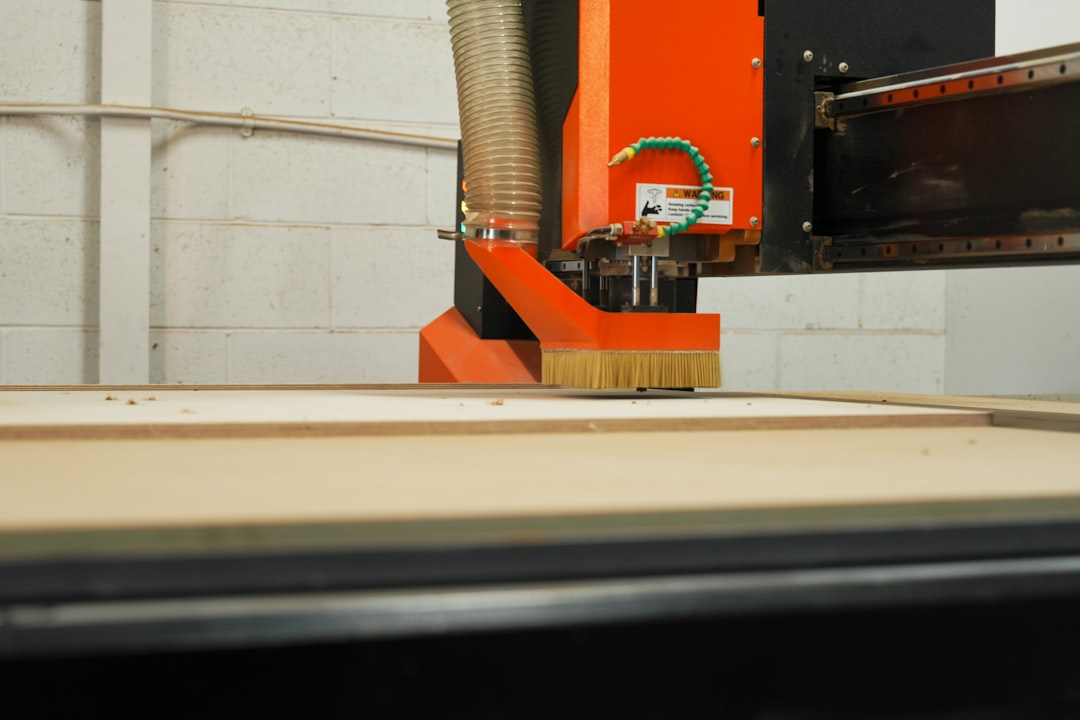
    CNC machine pre-routing cutouts in medical cabinetry for hospital MEP furniture interference check
    CNC machine pre-routing cutouts in medical cabinetry for hospital MEP furniture interference check | ZHOBAI Medical Furniture

    Learn more about hospital shop drawing alignment.

    However, 2D has fundamental limitations. It cannot reliably communicate Z-axis relationships—the exact height of a gas outlet relative to a shelf bracket, the slope of a drain pipe behind a cabinet back panel, or the vertical clearance needed for a door to open over a base cabinet. Equipment operating envelopes, maintenance access zones, and dynamic interference from movable equipment are invisible on a static plan. In a 400-bed hospital with hundreds of patient rooms, depending solely on 2D overlay means accepting a high probability of discovering clashes during installation.

    Field technician measuring wall rough-in for hospital MEP furniture interference check
    Field technician measuring wall rough-in for hospital MEP furniture interference check | ZHOBAI Medical Furniture

    For this reason, a thorough hospital MEP furniture interference check should combine 2D stacking with federated 3D model review. The 2D process catches obvious problems early; the 3D review resolves depth, service space, and operational conflicts that 2D cannot.

    two men sitting at a table with a laptop
    two men sitting at a table with a laptop | ZHOBAI Medical Furniture

    2. Four-Step BIM Interference Check and Drawing Freeze

    A structured four-step process ensures that every furniture-MEP interface is identified, resolved, and frozen before manufacturing begins. This method applies whether the project uses full BIM or a hybrid 2D/3D approach.

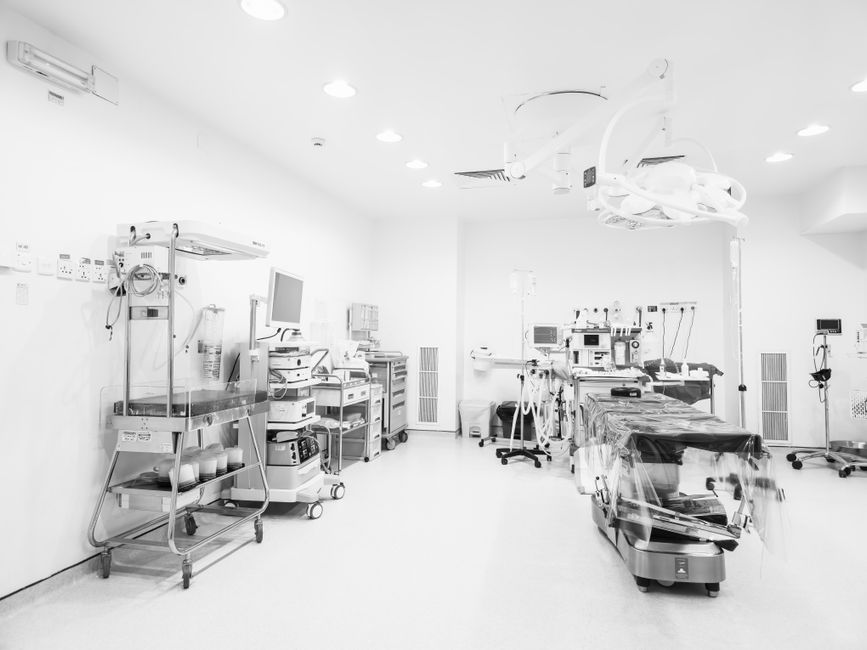
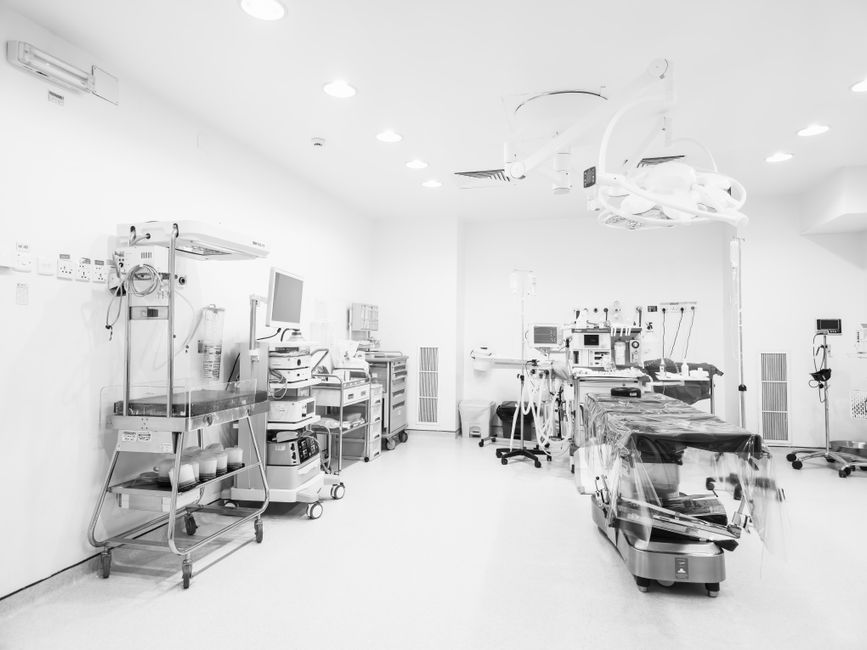
    A modern operating room featuring advanced medical equipment in a sterile, bright environment.
    A modern operating room featuring advanced medical equipment in a sterile, bright environment | ZHOBAI Medical Furniture

    Step 1: Information Readiness Check

    Before any model federation, verify the completeness and version of all input documents. This includes architectural, structural, MEP, medical gas, fire protection, equipment, and furniture shop drawings. Check for consistent units, origin points, coordinates, elevation references, and revision status. For projects with mixed software environments (Revit, Navisworks, AutoCAD, IFC), establish a common data environment (CDE) and naming convention as recommended by ISO 19650-1.

    person lying on bed near black flat screen tv
    person lying on bed near black flat screen tv | ZHOBAI Medical Furniture

    Step 2: Federated Model and Clash Rules

    Combine the discipline-specific models into a single federated model. Define test sets for furniture against wall-mounted and in-wall MEP elements. Apply appropriate tolerances: typical hard-clash tolerance for furniture is 5–10 mm; clearance clashes require 50–150 mm depending on the component. Categories include:

    An orange cnc machine cutting wood with a brush attachment.
    An orange cnc machine cutting wood with a brush attachment | ZHOBAI Medical Furniture
    Clash Type Hospital Furniture Example
    Hard Clash Cabinet body or bracket overlapping an electrical outlet, medical gas panel, pipe, valve, or diffuser.
    Clearance Clash Door cannot open fully because of a nearby cabinet; heat dissipation from equipment is blocked; insufficient space for plug insertion.
    Workflow Clash Furniture obstructs a bed, cart, or emergency equipment path; nurse station layout impedes clinical workflow.
    Sequencing Clash Correct interface location, but wall finishing, furniture installation, and MEP connection sequence conflict.
    Information Clash Model, shop drawing, equipment schedule, as-built, or site dimensions refer to different revision dates—no single reliable source.

    Step 3: Issue Resolution and Shop Drawing Alignment

    Each clash becomes a documented issue with a unique ID, screenshot, responsible party, deadline, and resolution. The approved solution is then written into the furniture shop drawings: exact cutout coordinates, hole sizes, edge treatment, and access panel locations. This step is the core of the hospital MEP furniture interference check—the point where model-based detection translates into manufacturing instructions.

    Step 4: Freeze, Sign-off, and Manufacturing Release

    MEP coordinator, EPC site team, and furniture manufacturer jointly sign off on each critical room. All unresolved issues are either closed or formally listed as exceptions with a documented mitigation plan. Only after this sign-off does the manufacturer release the cutting list to the CNC line.

    3. Factory Pre-Routing and Maintainable Modules

    Factory pre-routing—cutting holes, slots, and pocketing at the manufacturing stage—eliminates unplanned field cutting. At ZHOBAI Medical Furniture, we use CNC equipment to machine openings for outlets, medical gas terminals, drains, and data ports based on approved shop drawing coordinates. Each panel is edge-sealed with compatible PUR or ABS edge banding to maintain hygiene and moisture resistance. Components are identified by board number for full traceability back to the approved drawing.

    For high-risk areas such as ICUs, operating rooms, and labs, we recommend pre-routing only those openings that have been verified by a first-article inspection or a 1:1 mock-up. This mock-up validates the alignment of cutouts with actual rough-in positions and equipment templates.

    A critical design feature is the use of detachable back panels for access to valves, electrical junctions, and medical gas connections. Whether these panels are tool-free or secured with captive fasteners depends on security requirements and local codes. The hospital MEP furniture interference check must specify which service points require removable access and define panel size, material, and sealing method.

    Dimension Factory Pre-Routing Field Cutting
    Dimension Source Approved shop drawings and first-article verification Site tape measure under schedule pressure
    Edge Treatment Controlled: PUR/ABS edge banding, sealed cuts Manual: edge banding or sealant, variable quality
    Cleanliness Impact Minimal debris in factory Dust, noise, additional cleanup in sterile zones
    Traceability Drawing, board number, QC record Often undocumented, risking as-built accuracy
    Maintainability Access panels and service routes designed in Field cut may not consider future access

    4. Rework Financial Model and Project KPIs

    Industry data from the Construction Industry Institute (CII) indicates that rework typically accounts for 2–20% of contract value on capital projects. For a $10 million hospital furniture package, that translates to $200,000–$2 million in avoidable cost. The cost of discovering an interface problem after installation rises exponentially: field labor for cutting, MEP remobilization, damaged components, additional cleaning and testing, schedule delay overhead, and expedited replacement logistics.

    A hospital MEP furniture interference check directly reduces these losses. Measurable KPIs include:

    • Number of furniture-MEP clashes closed before manufacturing release.
    • Unplanned field cuts per 100 cabinets.
    • First-pass installation acceptance rate.
    • Average cycle time from RFI to resolution.
    • Number of replacement parts shipped via expedited freight.

    These metrics allow a project to track the return on investing in pre-production coordination. A simple scenario calculator can help stakeholders decide whether to fund an extended design review or absorb the risk of field modifications.

    5. Regional Project Execution Checklist

    Projects in Africa and the Middle East face specific risks that amplify the need for a rigorous hospital MEP furniture interference check. The following checklist addresses those risks:

    • Model maturity levels: Define three tiers (A: full BIM with IFC/Revit; B: 2D CAD with partial 3D; C: measured site plan with typical details). Adapt the interference check process accordingly.
    • Common data environment: Establish a CDE with file naming, revision status, and approval workflow to manage multi-source documentation.
    • Remote verification: Request site teams to provide measurement templates with photos, 360-degree videos, or point cloud scans, with reference to finished floor level.
    • Import lead times: Factor 8–16 weeks for replacement components. Include a spare parts kit for high-risk items like access panels and pre-routed back boards.
    • Site conditions: Address high temperature, dust, and cross-trade activity in the cutting protocol. Require controlled cutting areas with vacuum attachment and edge-sealing tools.
    • Code mix: The project may reference local building code, international consultant standards, owner specifications, and equipment manufacturer requirements. Record the hierarchy of applicable documents.

    The full coordinated procurement framework is described in our hospital FF&E procurement and blueprint solutions guide, which covers how to align furniture shop drawings with MEP information across project stages.

    6. Input Checklist for Suppliers

    To initiate a hospital MEP furniture interference check, a furniture manufacturer needs the following inputs from the project team:

    • Approved or current-status architectural, structural, MEP, medical gas, and fire protection drawings.
    • Federated model (IFC/Revit/NWC) with coordinate, unit, and elevation metadata.
    • Furniture schedule, room data sheets, and equipment cut sheets.
    • Point schedule for outlets, data ports, water supply/drain, valves, gas terminals, and access panels.
    • Completed surface measurement template with site photos and scaling reference.
    • Applicable codes, owner standards, and equipment manufacturer space requirements.
    • Document responsibility matrix and CDE access details.
    • Project schedule with design freeze, manufacturing release, shipping, and installation dates.

    ZHOBAI Medical Furniture can review submitted information and identify missing inputs, high-risk rooms, and the coordination steps required before manufacturing. We provide a project-level interface readiness assessment that includes a clear scope and timeline based on the actual documentation received.

    ZHOBAI Medical Furniture

    Ready to Apply These Principles to Your Project?

    Our engineering team responds to all project briefs within 24 hours. Share your FF&E scope — room count, property type, target timeline, and budget range — and we’ll provide a factory-direct assessment and indicative pricing within one business day.

    Send Your Project Brief →


  • Strait of Hormuz Supply Chain Disruption: Cut Costs 13.7%

    Strait of Hormuz Supply Chain Disruption: Cut Costs 13.7%

    As of July 2026, the Strait of Hormuz supply chain disruption is not a hypothetical risk—it is a live variable that directly affects shipping schedules, insurance premiums, and port decisions. For hospital projects, the most dangerous consequence is not a higher freight quote but the late arrival of a critical nurse station, laboratory cabinet, or fixed clinical storage package that sits on the installation and commissioning path. This playbook translates that geopolitical risk into manageable variables: shipping windows, alternative routes, material substitution, production visibility, and contract accountability. No supplier can eliminate external risk, but a validated source with consolidated production, unified BOM, and contingency routing can reduce the probability that a missing furniture component delays clinical compliance or opening day.

    Container ship at the Strait of Hormuz during supply chain disruption
    Container ship at the Strait of Hormuz during supply chain disruption | ZHOBAI Medical Furniture

    Clinical Compliance and the Bucket Effect

    Hospital furniture is not classified as a medical device, but fixed cabinetry, nurse stations, laboratory worktops, pharmacy modules, and hand-washing stations interface with plumbing, gas, equipment clearances, clean paths, and staff circulation. The absence of a single custom-built component can prevent a department from completing final installation, commissioning, or regulatory inspection. The Strait of Hormuz supply chain disruption turns this interface risk into a critical path problem: an ordinary activity chair delay rarely freezes a hospital, but a group of custom cabinets tied to piping and power lines often does.

    Hospital nurse station with custom cabinetry delayed by Strait of Hormuz disruption
    Hospital nurse station with custom cabinetry delayed by Strait of Hormuz disruption | ZHOBAI Medical Furniture

    Key Compliance Checkpoints Affected by Furniture Delays

    • Cleanable surfaces: Seamless edge banding, non-porous finishes, and resistance to disinfectants like 70% isopropanol or 500 ppm chlorine.
    • No-catch corners: Gaps below 2 mm where bacteria can accumulate; corners must be radiused.
    • Fixed anchorage: Seismic and stability requirements for cabinets above 900 mm in height.
    • Equipment clearances: Minimum 1000 mm access in front of imaging equipment; 900 mm clearance for patient beds.
    • Accessible routes: Corridor widths and turning circles for wheelchairs and stretchers.

    A disruption in the Strait of Hormuz supply chain can delay the arrival of these custom-fabricated items by weeks. With multiple suppliers, the number of interfaces multiplies: each vendor has its own drawing version, material substitution policy, shipping batch, and installation team. The result is a cascade of coordination errors that extend beyond the port and into the construction site. In one 2025 project in Southeast Asia, a missing pharmacy cabinet held up department validation for 11 days because the cabinet housed the controlled substance log and CCTV wiring. That delay cost the owner approximately $2,300 per day in standby labor and borrowed space.

    Logistics map showing alternative shipping routes for furniture around Africa
    Logistics map showing alternative shipping routes for furniture around Africa | ZHOBAI Medical Furniture

    To mitigate this, project teams should identify which furniture items lie on the critical path before placing orders. A simple room-by-room audit can flag the top 20% of components that drive 80% of the risk. Those items should be produced earliest, shipped with priority container allocation, and backed by material substitution approvals that do not require re-engineering.

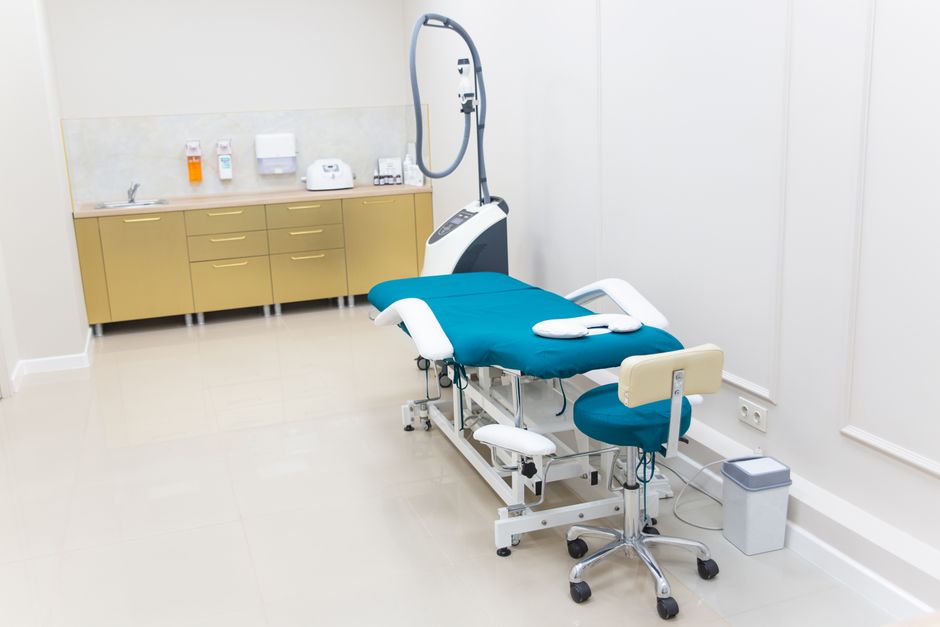
    Interior of a modern clinic with teal and white design elements, emphasizing healthcare ambience.
    Interior of a modern clinic with teal and white design elements, emphasizing healthcare ambience | ZHOBAI Medical Furniture

    Turnkey Model: Eight Control Points for Risk Reduction

    A turnkey hospital furniture solutions approach does not make geopolitical risk disappear. Its advantage is operational: one controlled bill of materials, one production schedule, one packing strategy, one logistics plan, and one accountable recovery process. This reduces the number of interfaces at which a critical decision can be delayed or lost. In the context of the Strait of Hormuz supply chain disruption, a single point of contact becomes the node for route decisions, container consolidation, and contingency activation.

    container ship in Strait of Hormuz with military escort
    container ship in Strait of Hormuz with military escort | ZHOBAI Medical Furniture

    The Eight Control Points

    Control Point Description Risk Mitigated
    1. Baseline freeze Room list, BOQ, BOM, interface diagram, and responsibility matrix locked before production Scope creep and mid-order changes
    2. Shop drawings Based on site re-measurements and MEP conditions, not concept renders Field-fit errors and rework
    3. Material substitution list Pre-approved A/B equivalent materials; no last-minute downgrades Quality loss during shortages
    4. Critical path classification Nurse stations, lab cabinets, pharmacy, fixed storage prioritized over loose furniture Delays in department commissioning
    5. Production visibility Dates and evidence for material intake, first article, batch, inspection, packing, container loading Late discovery of problems
    6. Container consolidation Packed by department and installation sequence; minimal loose parcels Site re-sorting and missing items
    7. Dual routing plan Primary route, backup port, switch trigger, insurance and cost sharing written into plan Route closure paralysis
    8. Recovery mechanism 24/48-hour impact assessment and recovery proposal after any disruption Decision delays

    The healthcare supply chain risk management framework above is not theoretical. It is a checklist that should be part of every RFP. When evaluating suppliers, ask for evidence of these controls in at least one recent project of similar scale. A supplier that can demonstrate control points 4, 6, and 7 is far better positioned to handle a Strait of Hormuz supply chain disruption than one that claims to be a “one-stop shop” without process documentation.

    Serene view of a container ship near Cuxhaven, Germany. Perfect for maritime themes.
    Serene view of a container ship near Cuxhaven, Germany. Perfect for maritime themes | ZHOBAI Medical Furniture

    Alternative Shipping Routes for Furniture

    Furniture is a volume-dense, low-value-per-CBM cargo. Route selection must weigh CBM, weight, destination, transshipment count, damage risk, customs complexity, and installation window. The Strait of Hormuz supply chain disruption forces project teams to evaluate alternatives that are often more expensive or restricted. Below are the viable alternatives for healthcare furniture, with their trade-offs.

    A large cargo ship travels across the open ocean, framed against distant mountains under a clear sky.
    A large cargo ship travels across the open ocean, framed against distant mountains under a clear sky | ZHOBAI Medical Furniture

    Route Comparison

    Route Advantages Limitations Best For
    Round Africa (Cape of Good Hope) Avoids Red Sea and Hormuz; full container capacity 8–12 additional days; higher fuel and charter rates European and Mediterranean destined full-container shipments
    China-Europe Railway (Xi’an to Duisburg, etc.) 14–18 days; regular schedules Higher cost per CBM; limited to 30–40 ft containers; gauge and weight restrictions Time-critical cabinetry or hardware for Europe-bound projects
    Middle Corridor (Trans-Caspian) Via Kazakhstan, Caspian, Caucasus to Europe; 18–23 days possible Multiple border crossings and transshipments; historically 30–45 days High-value, low-volume emergency batches for EU projects
    Indian Ocean + Gulf East Coast (Jebel Ali via Oman) Avoids Strait of Hormuz crossing; access to GCC via road Requires land logistics from Oman or UAE east coast; security checks GCC projects with flexible inland clearance
    Air freight / Sea-Air Fastest (3–7 days) Extremely high cost; not feasible for large furniture Small components, specialized hardware, critical spare parts

    The alternative shipping routes for furniture must be evaluated on a per-shipment basis. The Strait of Hormuz supply chain disruption does not automatically shut all lanes; it raises the cost and complexity of each option. For a 40-foot container of ward cabinets, the Cape route may add $1,500 to $2,500 in fuel and time costs. Rail for the same volume might be $3,000–$5,000 more expensive. Air is only viable for items under 500 kg. The key is to have a portfolio strategy: designate which items go by ocean, which by rail, and which by air, and set triggers for switching. For example, if the Strait of Hormuz traffic volume drops below a threshold (monitored through Lloyd’s list or satellite data), automatically re-route the next booking via the backup plan. This pre-decision avoids the panic rush that drives spot rates up by 200–300%.

    CFO Risk-Adjusted Cost Model

    A responsible financial model for healthcare furniture procurement in 2026 must go beyond FOB or CIF quotes. The Strait of Hormuz supply chain disruption introduces probability-weighted costs that can add 10–20% to the realized landed cost. Below is a comparative scenario for a typical $1 million furniture package shipped from China to a European hospital.

    Cost Item Fragmented Sourcing (USD) Integrated Turnkey (USD) Note
    Product & packaging $1,000,000 $1,000,000 Same base product
    Basic ocean freight $120,000 $95,000 Consolidated containers vs. multiple LCL shipments
    War risk / fuel surcharges / congestion $70,000 $40,000 Integrated buyer absorbs less surcharge volatility via annual contract
    Multiple batch storage, re-dispatch & site waiting $85,000 $30,000 Fewer shipments = lower warehousing and idle labor
    Expected delay cost (probability-weighted) $150,000 $65,000 Assumes 25% probability of 30-day delay at $5,000/day for fragmented; 10% probability for integrated
    Risk-adjusted total $1,425,000 $1,230,000 Difference: $195,000 (13.7%)

    This model assumes a specific destination and Incoterm (CIF). It is an illustration, not a guarantee. However, it demonstrates that reducing hospital construction budget requires a process that addresses the right levers: consolidating orders, pre-approving material substitutions, and maintaining a contingency fund for route upgrades. The Strait of Hormuz supply chain disruption makes these levers more valuable because the probability of a disruptive event has increased. Project teams should run their own numbers using their specific delay cost per day, financing rates, and opening penalties. A 13.7% differential on a $1 million package is $137,000—enough to fund an entire ward’s loose equipment.

    Supplier Audit: 12 Questions for the Procurement Team

    To convert risk awareness into procurement action, every hospital or EPC should audit potential furniture suppliers against these 12 questions. The answers will separate firms that have real operational capability from those that rely on marketing language.

    1. Which furniture items lie on your project’s critical path for installation or commissioning?
    2. Can you provide a department-level BOM with CBM, packing list, and container loading sequence?
    3. Who approves material substitutions? What prevents downgrades when a shortage occurs?
    4. What is the validity of your quotation? How are war risk, fuel surcharge, congestion fee, and currency fluctuation adjusted?
    5. What are your primary route, backup port, and switch conditions for this destination?
    6. Which items are suitable for rail, sea-air, or air relative to this project’s timeline and budget?
    7. Who handles customs clearance, destination documentation, demurrage, and exception handling?
    8. What verifiable production milestones do you track? Can we inspect at material intake, first article, and before loading?
    9. Is the container packing sequence aligned with the site installation schedule?
    10. After a voyage cancellation, how quickly do you provide an impact assessment and recovery plan?
    11. Do you support third-party inspection, mock-up room, and container loading supervision?
    12. Can you share delivery evidence from similar countries, ports, or project types?

    A supplier that can answer all 12 with documented evidence—e.g., past project photos, shop drawings, milestone reports, route contingency plans—is operationally prepared for the Strait of Hormuz supply chain disruption. ZHOBAI Medical Furniture, with 15+ years of experience, a 10,000+ sqm manufacturing base, CE and ISO certifications, and a track record of projects in 30+ countries, routinely provides this documentation. Our engineering team works from a single BOM, packs by department, and maintains dual routing plans for high-risk corridors. We have experience shipping to ports in Europe, Asia, Africa, and the Americas, and we can reference projects such as the Jiangsu Provincial People’s Hospital (500-bed) or the Xi’an International Medical Center where consolidated production and containerization avoided delays that affected the broader supply chain.

    When evaluating a medical grade furniture manufacturer China, look beyond brochures. Request the BOM and packing list from a recent project of similar size. Ask how they handled the 2024–2025 Red Sea crisis—that is the closest analog to today’s disruption. The Strait of Hormuz supply chain disruption is a stress test for supplier resilience. Those who passed the Red Sea stress test are better equipped now.

    Frequently Asked Questions

    How does the Strait of Hormuz supply chain disruption affect lead times for hospital furniture?

    Lead times extend by 10–20 days depending on route, vessel availability, and port congestion. Surcharges for war risk and fuel add 5–15% to freight costs. The larger risk is schedule uncertainty, which can delay installation sequencing and clinical commissioning.

    What are the best alternative shipping routes for furniture from China to Europe?

    The Round Africa route offers capacity but adds time. Rail via Kazakhstan and the Middle Corridor can be faster for high-value, low-volume items. Sea-air through Dubai or Singapore is an emergency option for critical components. Each option must be evaluated against CBM, destination, and project timeline.

    Can turnkey hospital furniture solutions really reduce risk?

    Turnkey models cannot eliminate external risk, but they consolidate responsibility, reduce interface errors, and provide a single recovery point. Pre-approved material substitutions and consolidated shipments lower the probability of missing critical items. The key is to verify that the supplier has documented process controls, not just a sales pitch.

    What should a hospital CFO include in a risk-adjusted cost model?

    The model should include product cost, packing, inland transport, ocean freight, insurance and surcharges, port and storage fees, site handling, and a probability-weighted delay cost. Use your own delay cost per day (e.g., standby labor, equipment rental, penalty clauses) to compute the expected impact. A 10–15% risk premium is reasonable for shipments transiting high-risk chokepoints.

    The Strait of Hormuz supply chain disruption is not a reason to panic—it is a reason to plan. By applying a structured risk framework, verifying supplier capabilities, and building financial models that account for uncertainty, project teams can protect their opening timeline and budget. The difference between a delayed project and an on-time opening often comes down to these three actions: identifying critical-path components, consolidating procurement under a single accountable partner, and pre-authorizing route and material contingencies. That is the playbook.

    ZHOBAI Medical Furniture

    Ready to Apply These Principles to Your Project?

    Our engineering team responds to all project briefs within 24 hours. Share your FF&E scope — room count, property type, target timeline, and budget range — and we’ll provide a factory-direct assessment and indicative pricing within one business day.

    Send Your Project Brief →